Thailand With a Baby: What to Expect + Baby Travel Tips (0–12 Months)
Thailand is a surprisingly easy and baby-friendly destination for families traveling with babies aged 0–12 months. With good healthcare, comfortable accommodation and affordable transport, Thailand offers a practical setting for long-haul travel with a baby, especially when you keep a slow pace and choose family-friendly places.
Traveling to Thailand with a baby can work well when you slow down and plan around your baby’s needs. Based on our experience traveling in Thailand as a family, and from seeing how many parents travel here with young babies, access to healthcare, comfortable accommodation and reliable transport play an important role when traveling long-haul with a baby.
The overall experience depends largely on travel pace and destination choice. Staying longer in one place, avoiding overly busy routes and choosing baby-friendly areas makes a noticeable difference. Parents who prioritize comfort, routine and flexibility generally experience less stress while traveling with a baby.
For parents considering traveling to Thailand with a baby, especially for the first time, realistic expectations and a flexible itinerary are key.
Traveling with an older child instead? Our Thailand with a Toddler guide focuses on children aged 1 to 3 years and covers destinations, activities and practical travel tips.
Quick Summary: Thailand with a Baby
- 👶 Baby-friendly basics: good healthcare, pharmacies and baby supplies are widely available
- 🧭 Pace matters: fewer places and shorter travel days work best with a baby
- 📍 Where to go: Phuket, Krabi / Ao Nang, Koh Samui, Koh Lanta and Khao Lak offer a good balance of comfort and calm
- 🍼 Food & feeding: baby food and formula are available, but brands vary, so bringing your own formula is recommended
- 🤱 Breastfeeding: generally accepted, especially in tourist areas
- 🚕 Getting around: taxis and Grab work well, especially in cities
- 🕒 Daily rhythm: mornings out, afternoons slow or for naps
Affiliate disclosure: We only recommend places and services we’d use ourselves. Some links on this page are affiliate links, which may earn us a small commission at no extra cost to you.
We have been traveling long-haul as a family since our children were very young. Over the years, we have traveled with them both as babies under 12 months and later as toddlers, which shaped how we approach family travel: slowing down, choosing comfort over packed itineraries and planning days around rest rather than sights.
When we traveled through Thailand, our children were already a little older, but by then we were very familiar with the realities of traveling long-haul with babies. Many of the lessons we learned during those earlier trips are directly relevant when traveling with a baby in Thailand, where factors like heat, travel distances and daily routines influence how you plan your days.
This guide focuses specifically on what to expect when traveling in Thailand with a baby aged 0–12 months. The advice is based on our experience traveling as a family, combined with what we observed from many other parents traveling through Thailand with babies along the way.
For a broader overview of traveling Thailand with children of different ages, including toddlers and older kids, you can read our complete Thailand with Kids travel guide.
Traveling to Thailand with a baby or infant is mainly about adjusting pace, expectations and daily routines.
The basics come down to understanding the climate, planning travel days realistically and choosing a slow, comfortable way of moving through the country.
Quick Facts: Basics of traveling Thailand with a baby
- ☀️ Climate matters: heat influences nap times and daily rhythm
- 🐢 Slow travel works best: fewer destinations, longer stays
- 🏨 Comfort over location: accommodation choice is key
- 🕒 Routine first: plan around sleep and feeding
- 🧳 Less moving, less stress: travel days are the hardest days
What “basics” really mean when traveling Thailand with a baby
When traveling Thailand with a baby, the basics have very little to do with ticking off activities or sightseeing. For us, it was mainly about finding a travel rhythm that actually worked in a warm climate and over longer distances.
One of the biggest lessons we learned early on was slowing down. Thailand is much larger than many first-time visitors expect, and travel days often take longer than planned. When traveling with young children, we usually chose to stay at least three to four nights in one place. That gave us time to recover from travel days, settle into a routine and actually enjoy where we were, instead of constantly packing and moving on.
The climate plays a role in this as well. Heat and humidity naturally shape your days. Early mornings felt easier, while afternoons were often better suited for naps, quiet time or staying close to our accommodation. Trying to fill full days usually only added pressure, especially with younger babies who still sleep frequently.
Accommodation choice also became more important than location. We found that a comfortable room with air conditioning and enough space to rest mattered far more than being close to every attraction. Having a good base made our days more predictable and helped reduce small stresses that can quickly add up when traveling in Thailand with a baby.
Above all, flexibility became part of our basics. Even with a plan, days rarely go exactly as expected when traveling with a baby. Leaving room to adjust plans, skip things or simply have a slow day often made the biggest difference in how relaxed the trip felt.
Safety and health are common concerns when traveling to Thailand with a baby, but the basics are generally well covered when you plan ahead. Good healthcare, widely available pharmacies and a few simple precautions go a long way when traveling with a baby.
Quick Facts: safety & health overview
- 🏥 Good healthcare in cities and travel destinations
- 💊 Pharmacies everywhere for everyday baby items
- 🍼 Baby essentials available, brands may vary
- 🦟 Mosquito protection needed, baby beds not always covered
- 💧 Tap water not for drinking, extra care with bottles and pacifiers
Healthcare and medical facilities
Thailand has a well-developed healthcare system, especially in larger cities and established travel areas. Private hospitals and clinics are widely available and are commonly used by international travelers.
When traveling with a baby, it helps to know where the nearest hospital or clinic is in each place you stay, just in case.
Pharmacies and baby essentials
Pharmacies are easy to find throughout Thailand and usually stock a wide range of everyday items. When traveling with a baby, this means you don’t need to bring everything from home. Basic supplies like diapers, wipes, baby skincare products and simple medicines are widely available, especially in cities and tourist areas.
More specific baby items, such as certain brands of formula or baby food, are also available but can vary by location. We go into more detail about what you can buy in Thailand and what is worth packing yourself later in this guide.
💛 Crew Moment: During one of our trips, our daughter got stung by a jellyfish while swimming. We went to a nearby pharmacy and were helped immediately. The staff knew exactly what to do and gave clear advice based on local experience.
Mosquitoes, heat and everyday hygiene
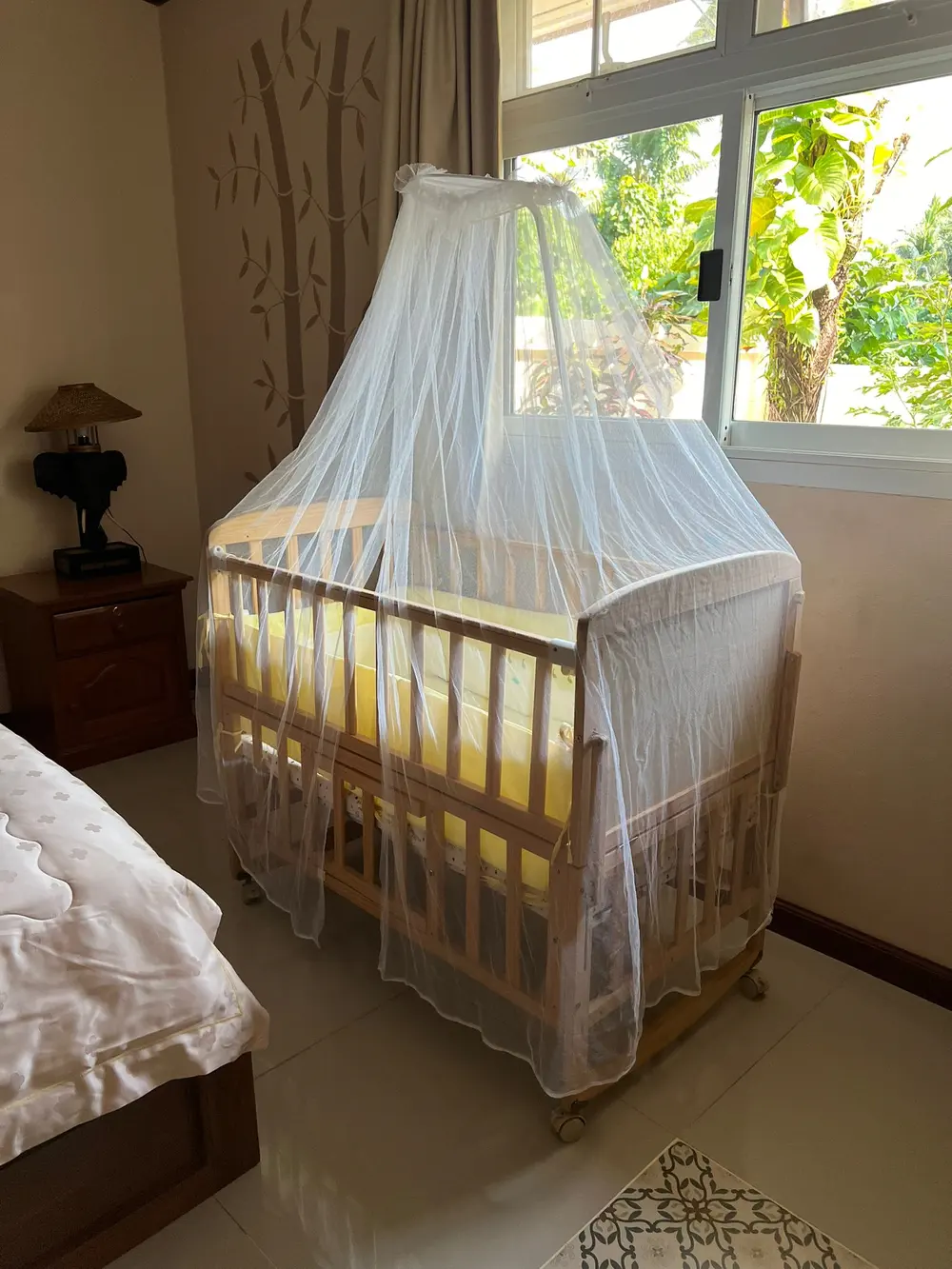
Mosquitoes are part of daily life in Thailand, especially in warmer and greener areas. In many accommodations, mosquito nets are available, but this is not always guaranteed for baby cots. It’s common to find a mosquito net over the main bed, while the baby bed is left uncovered. Bringing a lightweight mosquito net for babies or a travel cot with built-in protection can be a practical solution.
If you’re unsure what type of mosquito net or travel cot works best for Southeast Asia, we’ve shared our favorite picks in our Best travel gear for Asia with kids guide.
Heat and humidity also shape everyday routines. During the hottest hours of the day, staying in the shade, taking breaks or slowing down activities often works better than pushing through full schedules. Light clothing and regular hydration help keep days comfortable for both parents and baby.
When it comes to hygiene, tap water in Thailand is not considered drinking water. For babies, it’s a good idea to prepare bottles using bottled water and rinse bottles and pacifiers with bottled drinking water after washing. These small habits quickly become routine and help avoid unnecessary issues.
Traveling to Thailand with a baby is less about ticking off specific destinations and more about finding the right balance between practicality and what you, as parents, are looking for.
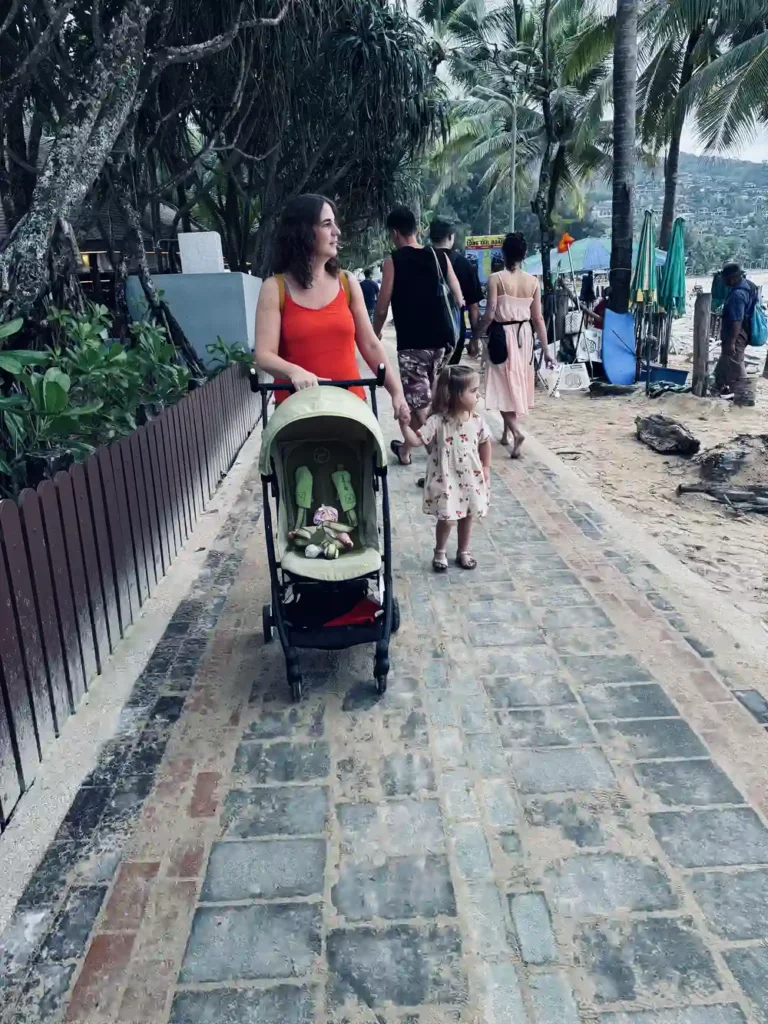
In reality, babies travel all over Thailand. Even before we had kids ourselves, we regularly saw families with babies in places like national parks, smaller islands and quieter beach towns. How well it works often depends on your baby, your pace of travel and how flexible you want to be.
That said, some places tend to work more smoothly for parents traveling with a baby, especially when it comes to logistics, comfort and access to facilities.
Quick Facts: baby-friendly places
- 🧭 Balance matters: the best places combine practicality with what you want as parents
- ✈️ Easy arrivals help: destinations with airports or short transfers work well
- 🏖️ Phuket: flexible start, wide choice of accommodation and facilities
- 🌊 Krabi / Ao Nang: compact, relaxed and easy for simple day trips
- 🌴 Koh Samui & Koh Lanta: island feel with a slower pace
- 🌴 Khao Lak: calm beaches and spacious resorts, great for slowing down
- 🗺️ Routes over hopping: shorter distances between places often work better than staying in just one spot
What makes a place work well with a baby in Thailand
When choosing destinations in Thailand with a baby, practical factors often matter more than highlights. Short transfer times, comfortable accommodation and nearby facilities can make a big difference to how relaxed your days feel, especially on a longer trip.
At the same time, personal travel style plays a role. Some parents feel more comfortable in lively areas with plenty of restaurants and services nearby, while others prefer quieter islands or smaller towns. With a baby, both approaches can work, as long as expectations and daily rhythm are adjusted.
Rather than focusing on one “perfect” destination, many families find it helpful to think in terms of a route with manageable distances, so travel days don’t become overly long or exhausting.
If you’re choosing a beach destination for your family, Phuket is generally easier with a baby, while Khao Lak offers a quieter experience. We compare the two in our guide to Khao Lak vs Phuket with kids.
Where to Stay with a Baby in Thailand
- Phuket is frequently chosen for its convenience. With an international airport, good healthcare and a wide range of accommodation options, it offers flexibility, especially at the start of a trip. If you’re narrowing down areas, our Where to stay in Phuket with kids guide looks at the most practical bases for families.
- Ao Nang, in the Krabi region, works well for families who want a calmer setting with everything close by. The town is compact and easy to navigate, making it a popular choice with babies. Our Where to stay in Ao Nang with kids guide breaks down the best areas to stay.
- Koh Samui combines island life with solid infrastructure. With its own airport, good roads and a mix of quiet beaches and more developed areas, it’s often chosen by parents traveling with a baby who still want comfort and convenience.
- Koh Lanta appeals to families looking for a slower pace. Longer beaches, fewer crowds and a relaxed atmosphere make it a common choice for longer stays with young children.
- Khao Lak is often chosen by parents looking for a calm, easygoing beach destination. With long beaches, spacious resorts and a slower pace, it works well for traveling with a baby. For a more detailed look at the area, see our Khao Lak with Kids guide. Khao Lak is particularly easy with a baby thanks to its calm beaches and relaxed pace. We share the most baby-friendly activities in our Khao Lak activity guide.
- Bangkok can be intense, but it also plays a practical role in many family trips. Some families use it as a short stop for flights, medical facilities or shopping before moving on to quieter destinations.
Some Thai islands are much easier to visit with a baby than others. In our overview of the best islands in Thailand with kids, we compare the most family-friendly options.
💡 Crew Tip: Ao Nang felt like a great balance for traveling with a baby. Baby essentials are easy to find, there are plenty of baby-friendly hotels, and simple outings like Railay Beach or a relaxed Four Islands tour are easy to do without long travel days.
Choosing a route instead of a single place
Traveling with a baby doesn’t mean you have to stay in one place the entire trip. Choosing a route with short travel distances between stops can work just as well. We’ve shared an example of a family-friendly route through Thailand in our Thailand with kids itinerary guide, focusing on realistic travel days and a slower pace. If you’d prefer something easy to follow, you can also download our free day-by-day Thailand itinerary PDF, which lays out our full two-week route in a simple overview.
What to look for when choosing accommodation with a baby in Thailand
When traveling Thailand with a baby, especially for the first time, the right base can make daily life much easier. Comfort, location and a calm environment usually matter more than the exact type of accommodation.
Things that often work well with a baby:
- 🚶 Everything within walking distance
Being close to restaurants, small shops and the beach reduces the need for transport and makes it easier to plan days around naps and feeding. - 🏠 Space and basic facilities
Having your own space, a fridge and a small kitchen or kitchenette can be very helpful when traveling with a baby. - 😴 A quiet place to sleep
A calm environment makes it easier for babies to nap and sleep, especially in a warm climate with busy days outside. - 🏊 Easy access to a pool or outdoor space
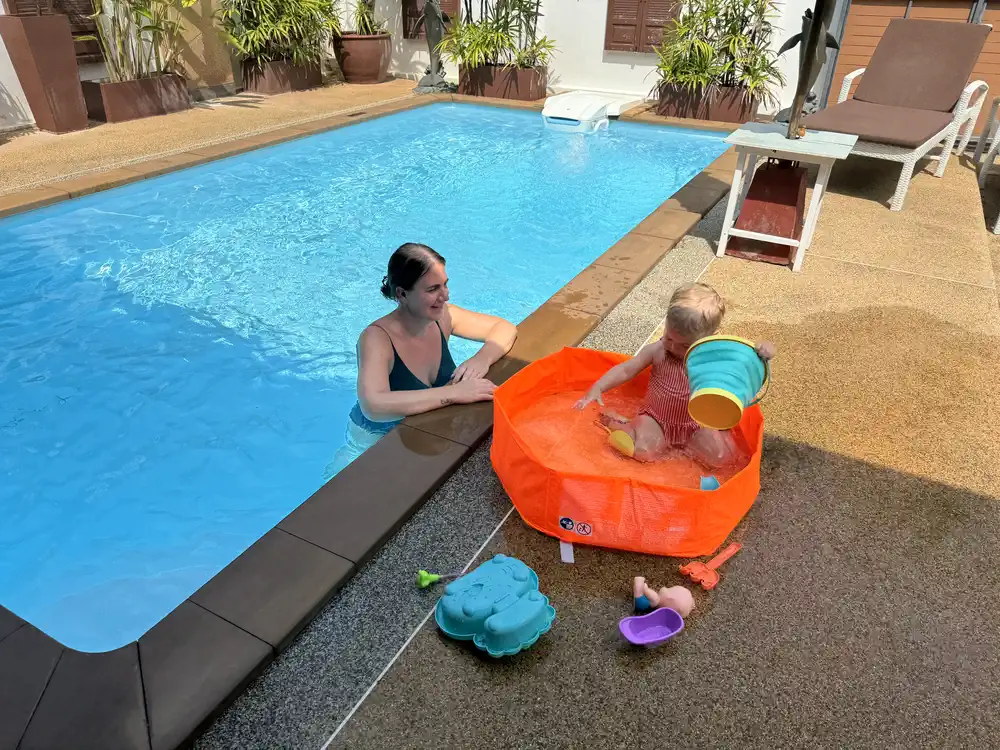
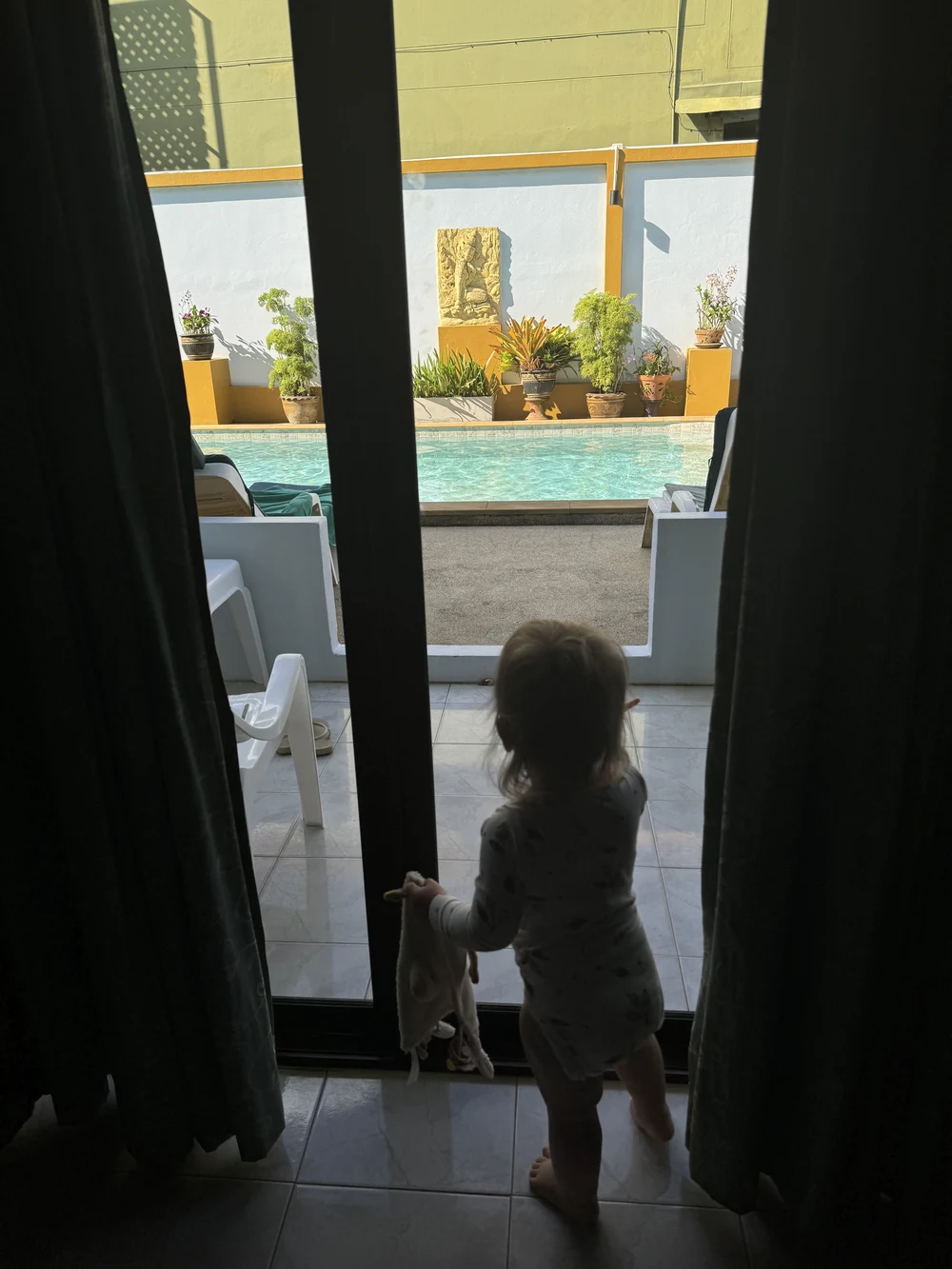
We often chose places where the pool was right outside our room. When our kids were napping, we could still sit nearby with the baby monitor, which made downtime feel much more relaxed.
Staying just outside the busiest areas often offers a good balance: close enough to facilities, but calm enough to slow down and settle into a rhythm with your baby.
Practical tips can make a big difference when traveling to Thailand with a baby. Small choices around food, transport and daily rhythm often determine how relaxed your days feel, especially in a warm climate and on longer trips.
Quick Facts: Practical Tips for Traveling Thailand with a Baby
- 🍼 Food & feeding: baby food and formula are available, but brands differ
- 🤱 Breastfeeding: widely accepted, especially in tourist areas
- 🧷 Diapers & wipes: easy to find almost everywhere, swim diapers less so
- 🎒 Pack light: bring key items you rely on, buy basics locally
- 🚕 Getting around: Grab works well in cities, short transfers help
- 📶 Stay connected: reliable internet makes travel easier
- 🕒 Daily rhythm: mornings out, afternoons slow or for naps
Food and feeding when traveling with a baby in Thailand
Food is often one of the first things parents worry about. In Thailand, basic baby food items such as jars, pouches and formula are available in supermarkets and convenience stores, especially in cities and tourist areas. That said, brands and compositions can differ from what you’re used to at home.
For that reason, we usually recommend bringing your own formula for the entire trip if your baby relies on a specific brand. Local options are useful as a backup, but having familiar formula avoids unnecessary switches.
For babies starting solids, simple foods like rice, fruit and vegetables are easy to find and prepare, especially if you have access to a small kitchen or fridge.
When preparing bottles or baby food, bottled drinking water is recommended. This quickly becomes part of your routine and is easy to manage once you settle into daily life in Thailand.
Breastfeeding while traveling in Thailand
Breastfeeding while traveling in Thailand generally feels straightforward. It’s normal to see parents feeding their babies in public, especially in tourist areas, cafés and beach towns. If you prefer more privacy, it’s usually easy to find a quiet spot at your accommodation, in a café or at the beach.
Because of the warm climate, staying well hydrated is important. Taking breaks, slowing down during the hottest hours and choosing comfortable places to rest helps make breastfeeding easier while traveling.
Diapers, wipes and changing on the go
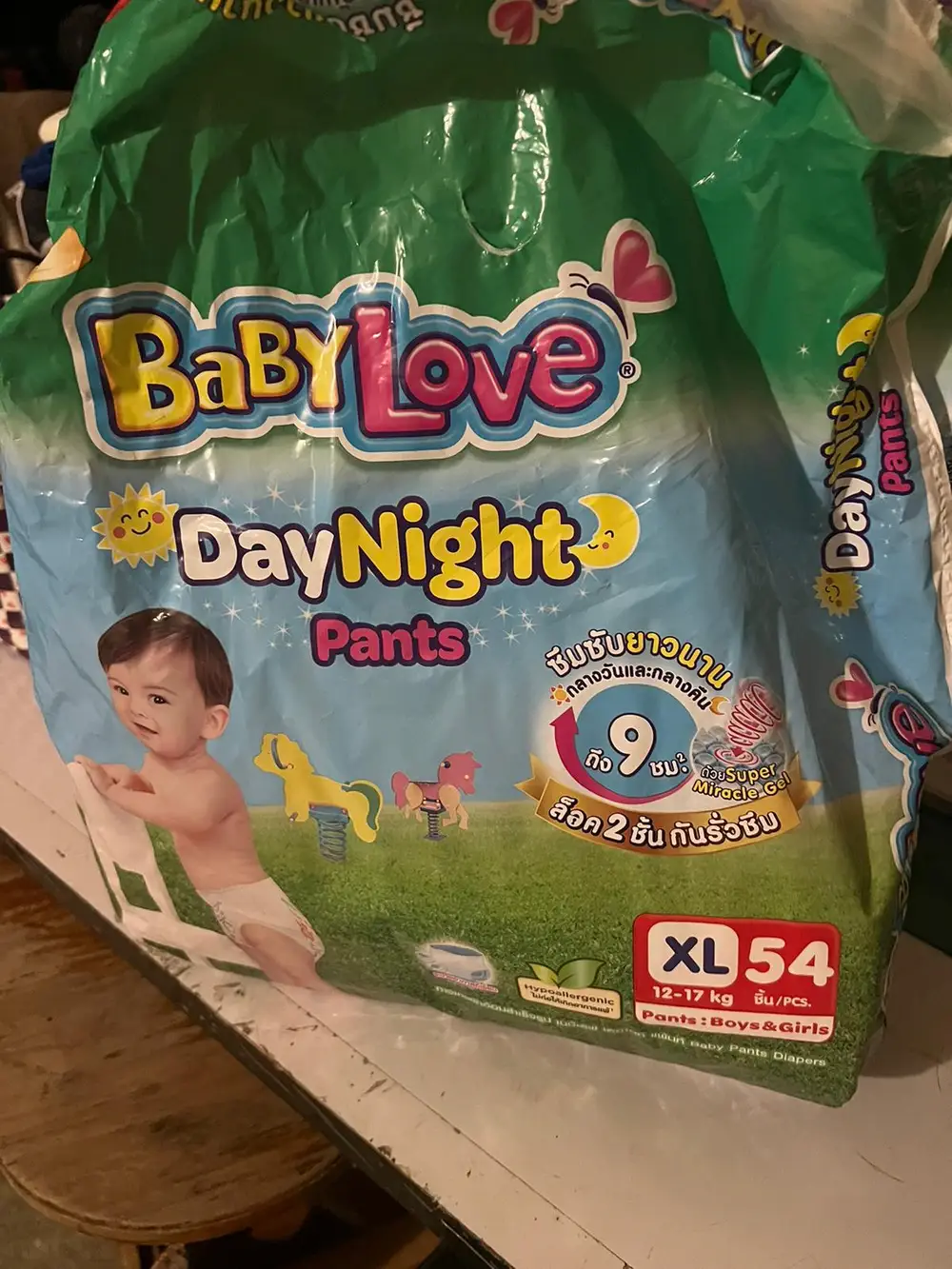
Diapers and wipes are easy to find throughout Thailand. Supermarkets, small local shops and 7-Eleven stores usually stock basic baby supplies, so running out is rarely a problem.
Swim diapers, however, can be harder to find and are not always available in every location. We recommend bringing a few swim diapers from home, especially if you plan to spend time at the beach or pool.
Changing facilities vary. Some shopping malls and larger restaurants have good facilities, while in other places you may need to improvise. Carrying a lightweight changing mat makes diaper changes on the go much easier.
What to pack for Thailand with a baby
You don’t need to bring everything, but a few well-chosen items make a big difference.
Things we always find useful:
- a lightweight travel stroller (we use and really like the Cybex Libelle)
- a baby carrier (we often travel with a Tula carrier)
- sun protection suitable for babies
- a small first-aid kit with familiar basics
For a complete overview, you can use our Thailand with kids packing list, which covers everything you need for traveling with a baby. We also have a downloadable kids travel packing checklist (PDF) if you prefer something you can tick off before departure.
💡 Crew Tip: We try to pack in a way that allows us to carry everything ourselves, including the kids in a stroller or carrier. Traveling light makes transfers easier and gives you much more flexibility when plans change.
Getting around Thailand with a baby
Getting around Thailand with a baby works best when travel days are kept short. In larger cities and tourist areas, Grab works very well for taxis and makes moving around flexible and easy.
Having reliable internet is important for transport, navigation and last-minute changes. We always travel with an eSIM and use Airalo, which we’ve found reliable across Thailand. Via our link, you get 15% off, which makes it an easy setup before you arrive.
For a more detailed breakdown of transport options, you can also check our Getting around Thailand with kids guide.
Flying to Thailand with a baby? Our complete guide to flying with a baby covers everything from airport preparation to surviving long-haul flights.
Keeping a daily rhythm while traveling
From our experience, daily rhythm matters more than squeezing things in. We usually alternate activity days with slower rest days, especially on longer trips.
On days when we do go out, we try to plan activities in the morning, when everyone has the most energy. Afternoons are often best kept free for naps, pool time or staying close to the accommodation. This gives babies the chance to sleep in a familiar environment and keeps days from feeling rushed.
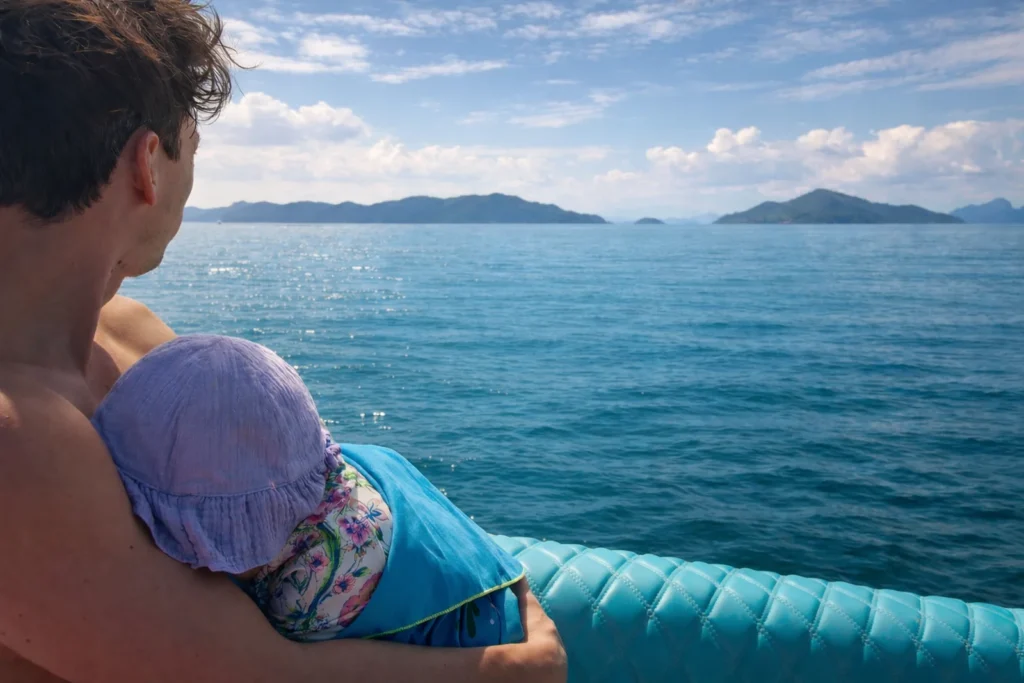
Traveling Thailand with a baby can feel like a big step, especially if it’s your first long-haul trip as a family. In reality, much of the experience comes down to slowing down, choosing the right bases and keeping daily routines simple. With a bit of preparation and flexible planning, Thailand offers a comfortable and rewarding setting to travel with a baby.
As babies grow and become more active, travel needs naturally start to change. Destinations, accommodation choices and daily rhythm often look different once your child moves beyond the baby stage. For a broader overview of traveling to Thailand with children of different ages, you can continue with our complete Thailand with Kids.
More family-friendly travel guides in Thailand
For more information and family-friendly destinations in Thailand, check out our guides:
- Best Beaches in Thailand with Kids
- Best Time to Visit Thailand with Kids
- Phuket vs Krabi with Kids
- Phuket with Kids
- Ao Nang & Krabi with Kids
📥 Want more practical help for traveling with kids?
Visit our Family Travel Shop for free printables, travel journals, and guides designed to make family trips through Thailand more relaxed and realistic.
You can also follow our journey and daily tips on social media.
The Little Passport Crew
Thailand can be a comfortable destination for traveling with a baby when trips are planned at a slow pace. Good healthcare, easy access to pharmacies and family-friendly accommodation make it possible to travel with a baby, especially when you choose short travel days and suitable bases.
Baby food and formula are available in supermarkets and convenience stores in Thailand, particularly in cities and tourist areas. Brands and ingredients may differ, so bringing your usual formula from home is recommended if your baby depends on a specific brand.
Breastfeeding is generally accepted in Thailand, especially in tourist areas, cafés and beach towns. Parents who prefer more privacy can usually find quiet spots at their accommodation or nearby cafés.
Tap water in Thailand is not considered drinking water. When preparing baby bottles or baby food, bottled drinking water should be used, including for rinsing bottles and bottle nipples after washing.
Places that combine comfort, short transfer times and access to facilities tend to work best with a baby. Popular choices include Phuket, Krabi and Ao Nang, Koh Samui, Koh Lanta and calm beach areas like Khao Lak.