The best travel gear for Asia with kids includes a lightweight stroller, a compact travel cot, breathable baby carrier, inflatable airplane bed, UV swimwear and reliable mosquito protection. These items help families handle heat, long flights and different sleeping situations while traveling through Asia.
The best travel gear for Asia with kids is equipment that is lightweight, compact and designed for warm climates. When traveling through busy cities, tropical islands and small villages, families benefit most from gear that is easy to carry, quick to set up and suitable for heat, humidity and long travel days.
Essential items include a foldable stroller, a travel cot for accommodations without baby beds, a breathable baby carrier, mosquito protection, UV clothing and sleep solutions for flights.
Quick Summary: Best travel gear for Asia with kids
- 🛒 Compact and lightweight travel stroller for city travel
- 🛌 Compact travel cot for hotels and homestays without baby beds
- ✈️ Inflatable airplane bed for long-haul flights
- 🎒 Baby carrier for hot climates
- 🩱 Rashguards and UV swimwear for sun protection
- 🦟 Mosquito nets and child-safe repellents
Traveling through Asia with young children is unforgettable, but it comes with very specific challenges. Think about the heat, mosquitoes around sunset, small hotel rooms and long flights where kids struggle to sleep.
Over the years we have tested many travel products across Southeast Asia. From traveling Bali with kids to exploring Lombok with young children and planning longer trips through Thailand as a family, we learned quickly which travel gear actually works in tropical conditions.
In this guide we share only the gear that truly made our trips easier, safer and more relaxed. Later in this article we recommend the exact products we personally use and trust.
Affiliate Disclosure
We only recommend spots and stuff we’ve actually tried or would happily use ourselves. Some links are affiliate links, if you book or buy through them, we might earn a small commission, at no extra cost to you. Thanks for helping us keep sharing family travel tips!
Flights
Trip.com

Hotels
Booking.com

Tours
GetYourGuide

e-Sim
Airalo
Rental Car
DiscoverCars
Boat & Train
12GoAsia

Family Travel Shop
Essential gear for family adventures
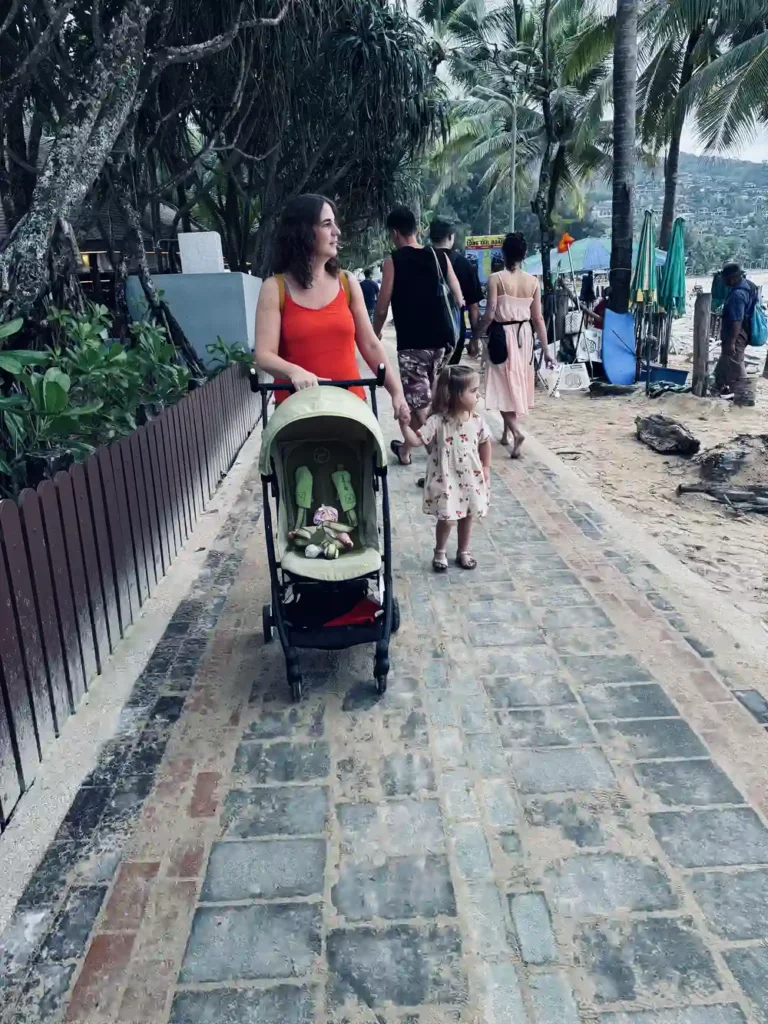
Traveling through Asia with kids often means busy cities, uneven sidewalks, stairs without elevators and frequent taxi rides. A full-size stroller quickly becomes impractical. A compact travel stroller makes sightseeing days, airport transfers and city travel much easier when exploring Asia as a family.
In many Asian destinations you will fold and lift your stroller several times a day, and often right up to the aircraft door. That is why size, weight and ease of use matter far more here than large storage baskets or heavy suspension.
What to look for in a travel stroller for Asia
- 🤏 Compact fold that fits easily in taxis and small hotel rooms
- 🪶 Lightweight enough to carry up stairs or onto boats
- ✅ Easy and quick folding mechanism
- ✈️ Cabin-friendly size so it can be taken to the gate and stored overhead on many flights
- 💺 Comfortable seat for long sightseeing days
Our recommended travel stroller
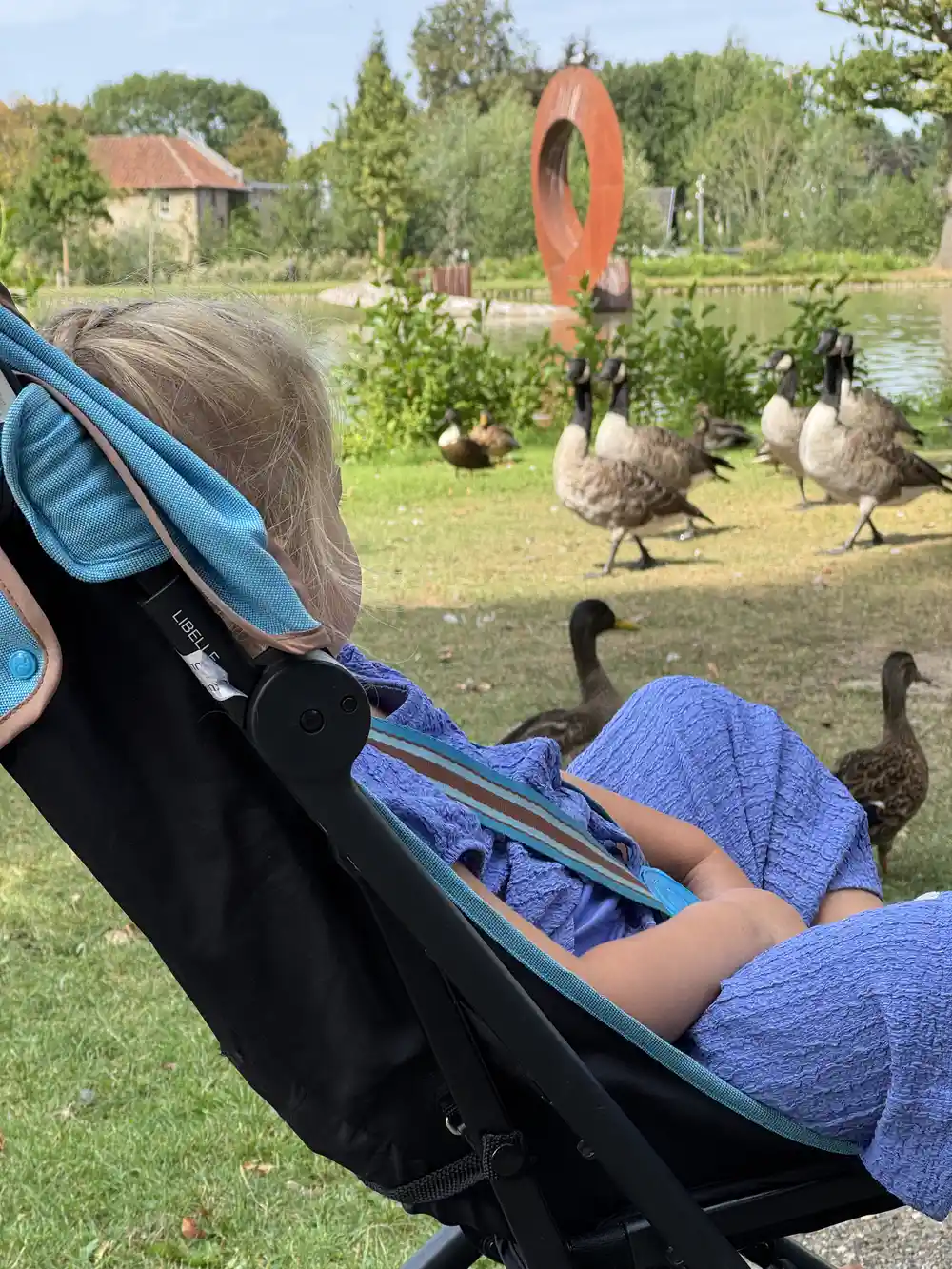
After traveling through Southeast Asia with kids, our top choice is the Cybex Libelle.
This stroller works especially well for Asia because it folds extremely small, is lightweight to carry and can often be taken all the way to the airplane door instead of being checked in. We have traveled with two of these strollers on multiple trips across Asia, including flights, taxis and daily city use.
Why we recommend it:
- Ultra-compact fold, ideal for taxis and flights
- Lightweight and easy to lift when needed
- Comfortable enough for full days of city exploring
- Practical for airports, transfers and urban travel
Where to buy:
Good alternatives if this stroller is not available
Availability can vary by country. Two well-known alternatives for family travel in Asia are:
- Stokke YOYO – very compact and popular for frequent flyers (formerly known as Babyzen YOYO)
- Joolz Aer – lightweight, comfortable and easy to fold
When comparing travel strollers, always check the folded dimensions and weight. In Asia, compactness and ease of handling matter more than extra features.
When traveling through Asia with young children, sleeping arrangements are not always reliable. Many hotels try to provide a baby bed, but in reality this is not always available. Sometimes all baby beds are already in use. In other cases the bed is not sturdy, has low sides, or simply does not feel safe for a good night’s sleep.
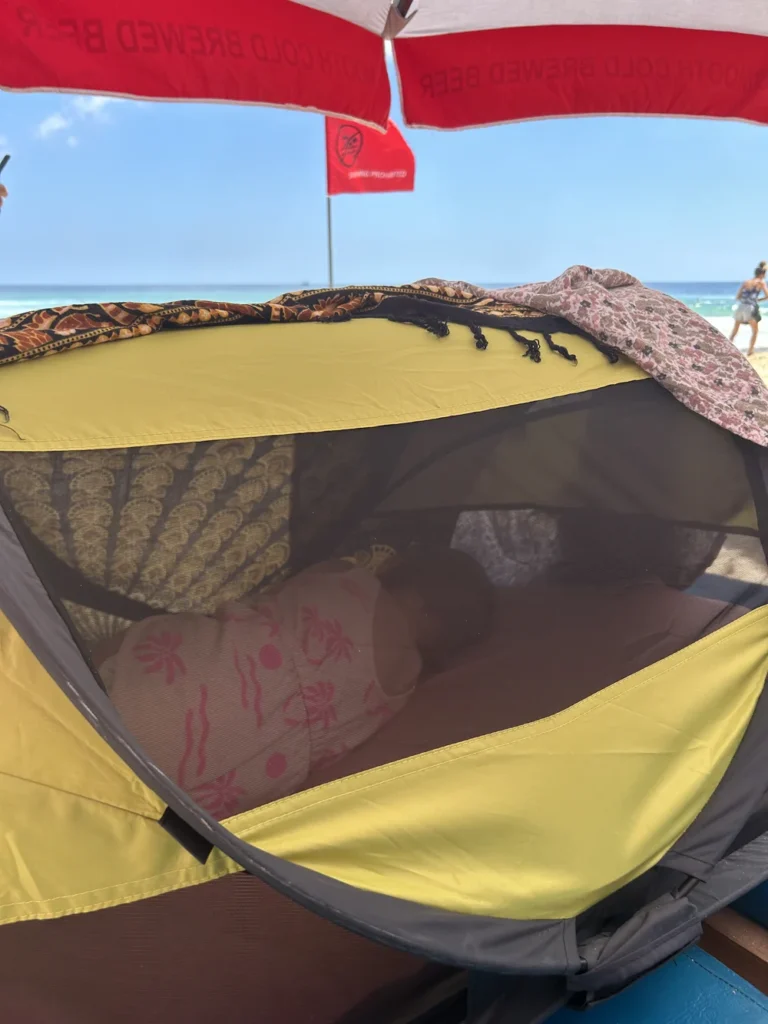
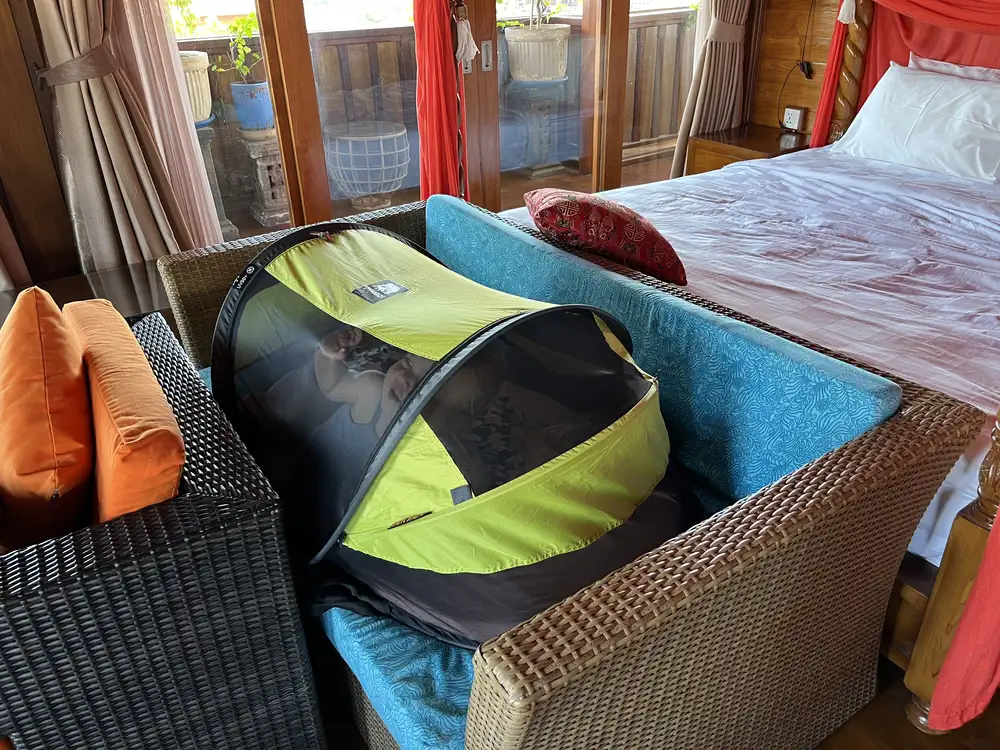
That is why we prefer to travel with our own travel cot. It gives peace of mind and flexibility. We use it not only in hotel rooms, but also on the beach for a nap in the shade or as a safe place for a baby to play while we get ready or sit outside.
What to look for in a travel cot for Asia
- 🤏 Lightweight and compact so it is easy to carry during flights and transfers
- 💨 Quick pop-up setup without complicated frames
- 🛌 Comfortable mattress for proper sleep away from home
- 🦟 Good airflow and protection against insects
- ☀️ Suitable for warm climates and outdoor use
Our recommended travel cot
Our go-to travel cot for Asia is the Deryan travel cot, in particular the Baby Luxe model.
This travel cot stands out because it is truly designed for travel. The pop-up system makes it ready to use within seconds, and the compact size makes it easy to bring on flights and taxi rides. We have used it many times across Asia, both indoors and outdoors.
Why we like this travel cot:
- Pop-up design that sets up in seconds
- Very lightweight and easy to carry
- Comfortable mattress included
- Mesh sides for airflow and protection
- Practical for beach naps and shaded playtime
Where to buy:
Deryan offers different models depending on age and size. The Baby Luxe is ideal for babies, while the Toddler Luxe version offers more space for toddlers. You do not need to link every model, but it is helpful to mention that there are options depending on your child’s age.
Good alternatives if this travel cot is not available
If the Deryan travel cot is not available in your country, these compact and travel-friendly options are worth considering:
- BabyBjörn travel cot. A lightweight and reliable option that is easy to fold and popular with traveling families.
- AeroMoov travel cot. Slightly more robust, but still compact and suitable for frequent travel.
When comparing travel cots for Asia, focus on how compact they are when packed and how quickly they can be set up. These two factors make the biggest difference when moving between destinations with young children.
A baby carrier is one of the most important travel items when exploring Asia with kids, especially if you like to go beyond cities and resorts. While strollers are great for urban areas, they quickly reach their limits when you start hiking, taking boat transfers or visiting places with lots of stairs and uneven paths.
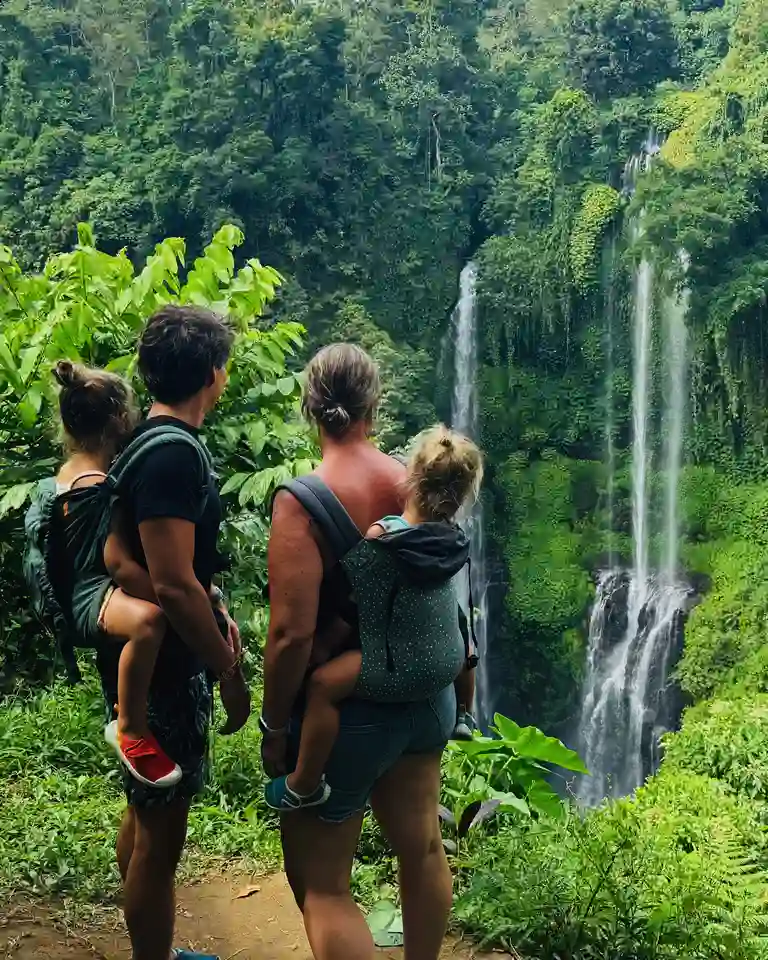
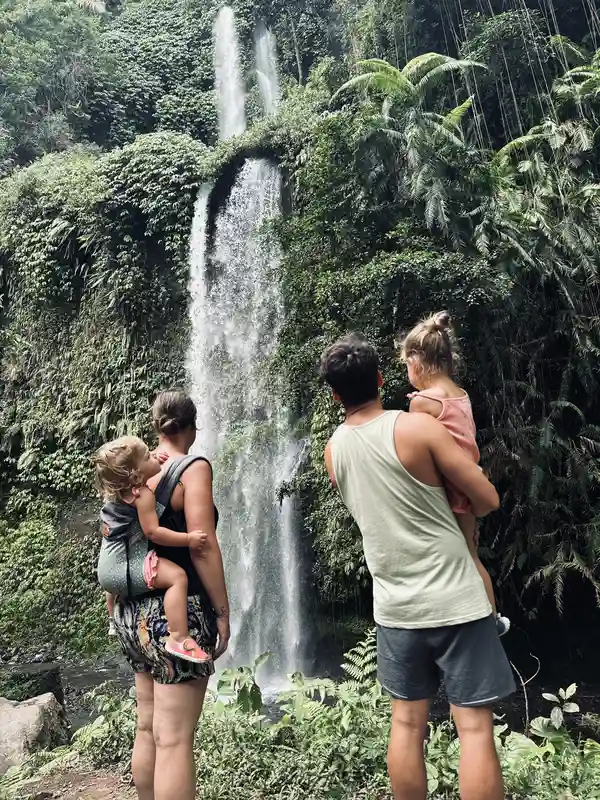
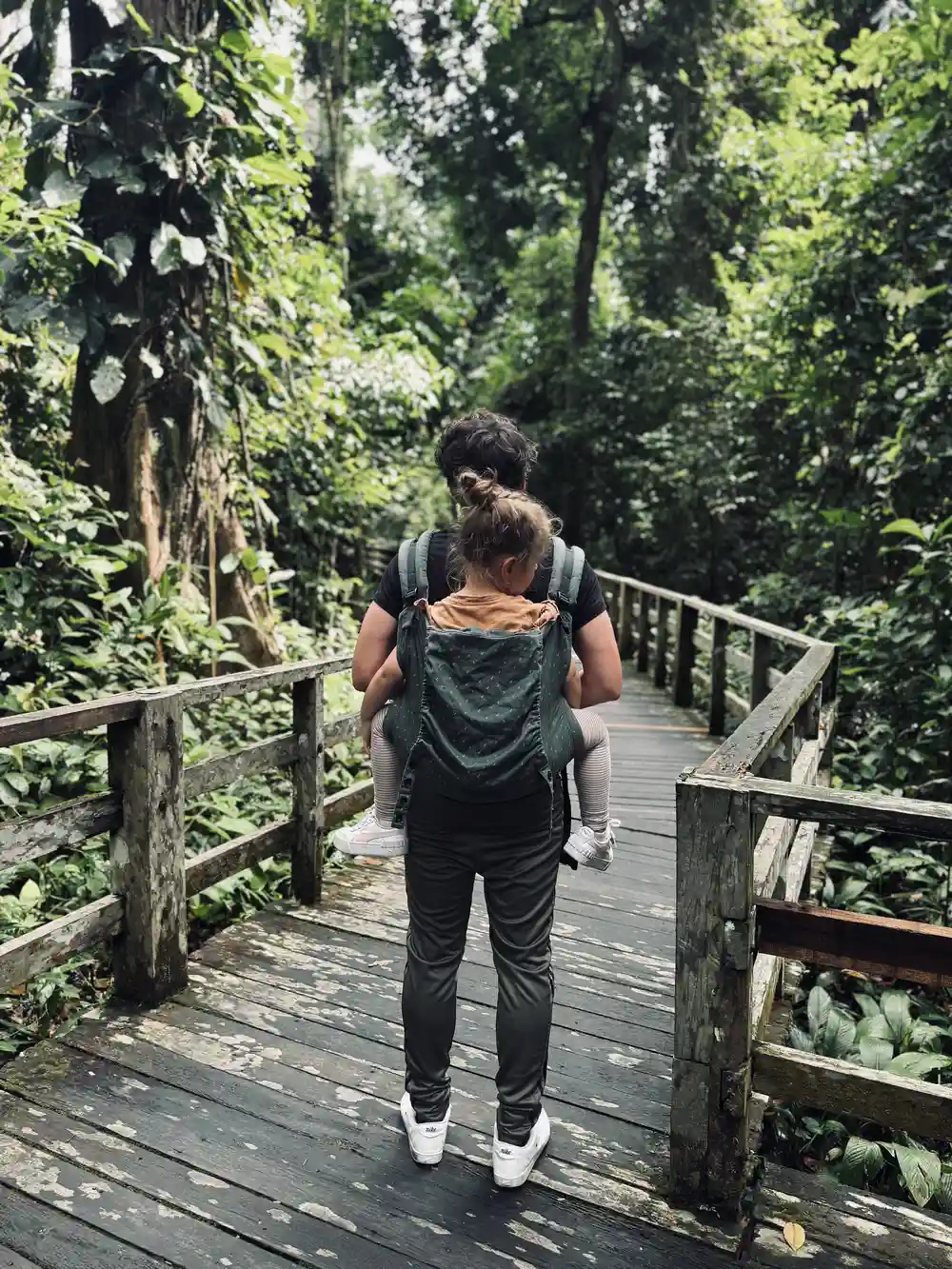
We use a carrier not only for babies, but also for our toddler and even our four year old. When walking through nature, visiting waterfalls or doing longer hikes, a carrier gives much more freedom than a stroller. Our kids often fall asleep in the carrier during walks, which makes longer days much more relaxed for everyone. It can get warm, but we consider that part of the adventure.
A carrier is also extremely useful during boat transfers, ferry rides and speedboats, where a stroller is simply not practical or allowed.
What to look for in a baby carrier for Asia
- 👧🏻 Suitable for babies, toddlers and older children
- 💪 Ergonomic support for both parent and child
- ☀️ Breathable materials for hot and humid climates
- ✅ Easy to put on and take off during transfers
- 🚶♀️ Comfortable enough for longer walks and hikes
Our recommended baby carrier
Our go-to carrier for traveling through Asia with kids is the Tula baby carrier.
We always travel with two carriers, one for each child. We have used them on city walks, jungle paths, beach transfers and long nature hikes. From exploring waterfalls like Sekumpul Waterfall with kids to walking trails near Tiu Kelep Waterfall with kids, the carrier allows us to reach places that would be impossible with a stroller.
Why we like this carrier:
- Comfortable fit for both parent and child
- Works well for toddlers and older kids, not just babies
- Supportive enough for sleeping children during walks
- Reliable for longer and more adventurous outings
- Easy to use during boat and transport transfers
Where to buy:
Good alternatives if this carrier is not available
There are several ergonomic carriers on the market that can work well for travel in Asia. When choosing an alternative, focus first on comfort, support and durability rather than price. A good carrier will last for years and make long walks, hikes and transfers much more enjoyable for both you and your child.
Look for options that provide:
- Proper weight distribution so your back and shoulders do not tire quickly
- Breathable fabric for hot and humid conditions
- Adjustable sizing to fit both parent and child comfortably
Choosing a cheaper carrier that does not fit well or lacks support can make long days on foot uncomfortable and even painful. Investing in a quality carrier that fits your family can make a big difference on longer trips.
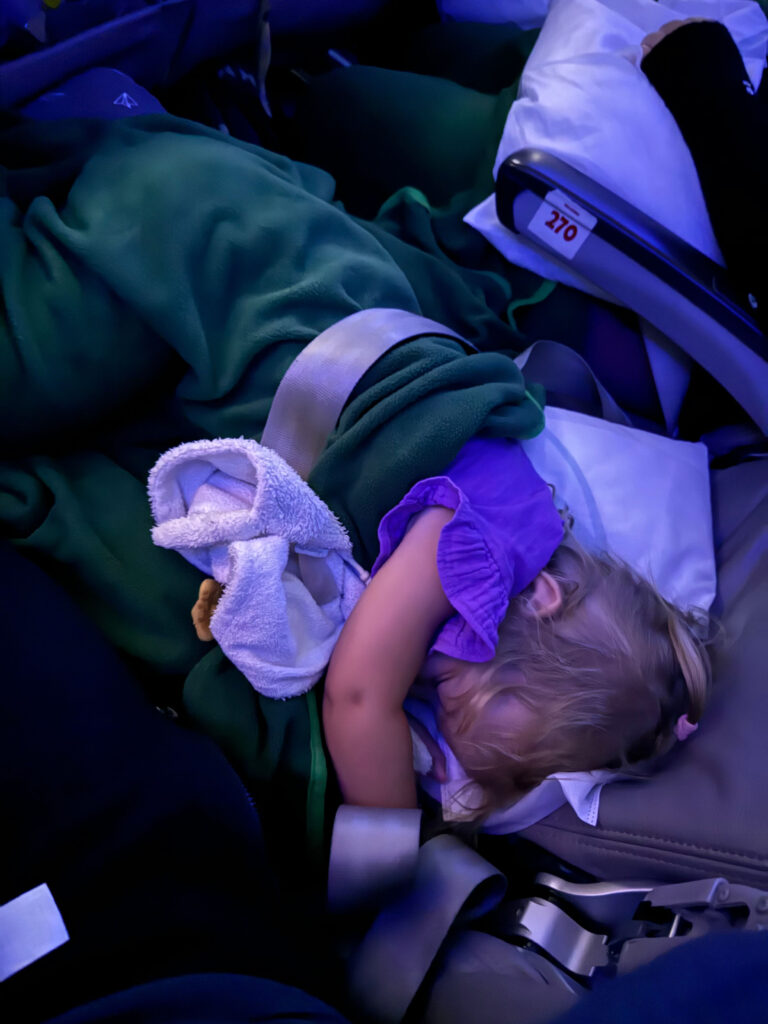
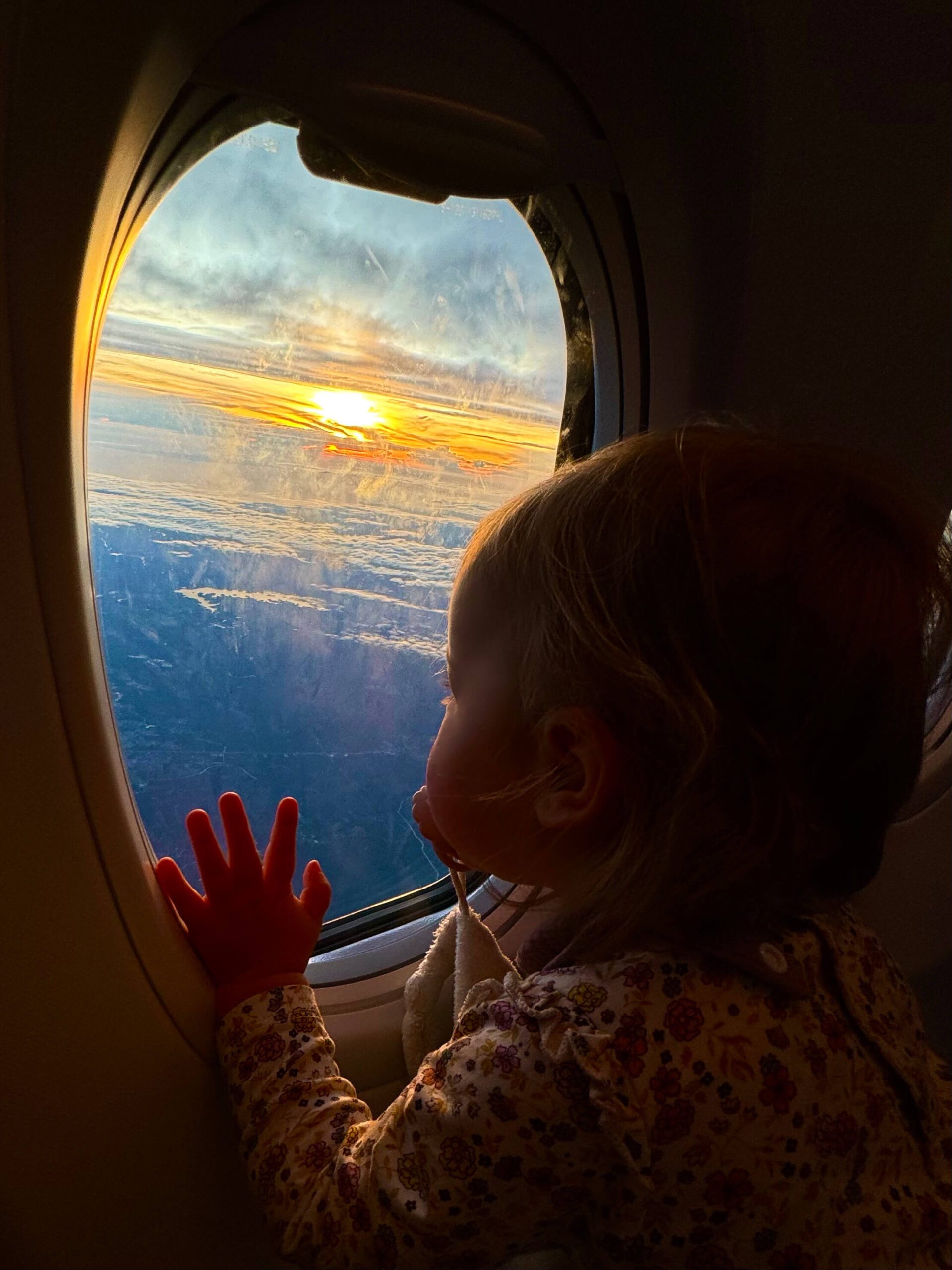
Long haul flights are often the hardest part of traveling Asia with kids. Sitting upright for long periods makes it difficult for children to rest comfortably during flights. An inflatable airplane bed can make a big difference in how well kids sleep on long journeys.
For babies, airlines sometimes offer a bassinet that attaches to the wall in front of the seats. This can work well, but availability is limited and never guaranteed. Bassinets need to be requested in advance and are only available on certain seats and aircraft types. For older babies, toddlers and young children, an inflatable airplane bed is often a much more reliable solution.
An airplane bed is a small and lightweight item when packed. Once on board, you inflate it and place it in the footwell between your child’s seat and the seat in front. Together with the seat, it creates a flat surface where children can lie down and sleep more naturally.
If you want to optimize your carry-on setup, you can also check our guide to 5 essential carry-on items for flying with kids, where we share other small items that make flights easier.
What to look for in an inflatable airplane bed
- 🤏 Very compact size when deflated
- 🌬️ Easy and quick to inflate on board
- ✅ Stable design that fits well in standard economy seats
- 🛌 Comfortable surface for sleeping children
- 👧🏻 Suitable for toddlers and young kids
Our experience using an airplane bed
We have used inflatable airplane beds on multiple long flights, and they have made a noticeable difference in how rested our kids feel on arrival. Once the bed is set up, children can lie down naturally and even change sleeping positions during the flight.
There are a few practical things to keep in mind. If you book bulkhead seats, the space in front is often too large to properly secure the bed. In that case, it will not stay in place. Also, on many airplanes the armrests between seats do not lift fully, which can make the sleeping surface slightly narrower. This is usually manageable, but it is good to be aware of before boarding.
Good alternatives and practical notes
There are many inflatable airplane beds available and the exact brand is less important than the design and fit. Choose a model that is easy to inflate, stable once in place and compact enough to carry in your hand luggage.
Our recommended inflatable airplane bed:
We use a compact, inflatable airplane bed that fits most standard economy seats and packs down very small in our carry-on.
Where to buy:
Always check airline policies before your flight. While inflatable airplane beds are widely used, acceptance can vary depending on airline and crew. In our experience, they are usually allowed on long haul flights when used responsibly and not during takeoff or landing.
Mosquitoes are part of traveling through Asia, especially in tropical areas. On many destinations where mosquitoes are most active, hotels and accommodations do provide mosquito nets for adult beds. What they usually do not have is a proper mosquito net for a baby bed or child’s sleeping space.
This is something we have experienced many times. As parents, you are protected, but your child is not. That is exactly where bringing your own mosquito net becomes important, especially when traveling through Thailand with kids.
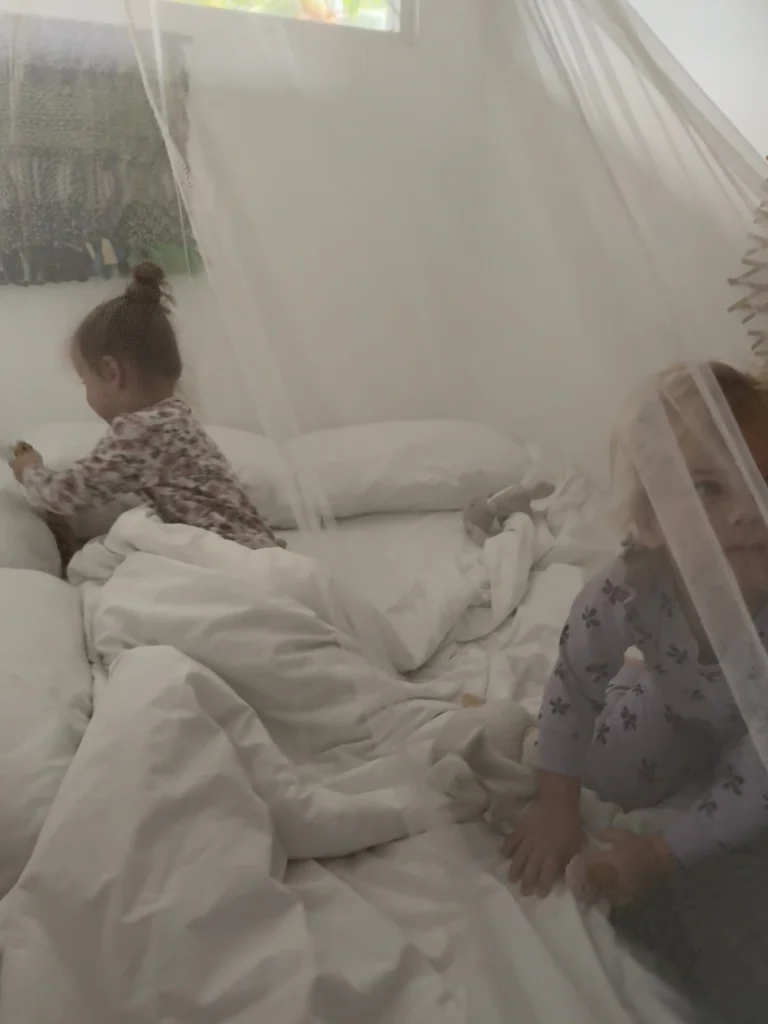
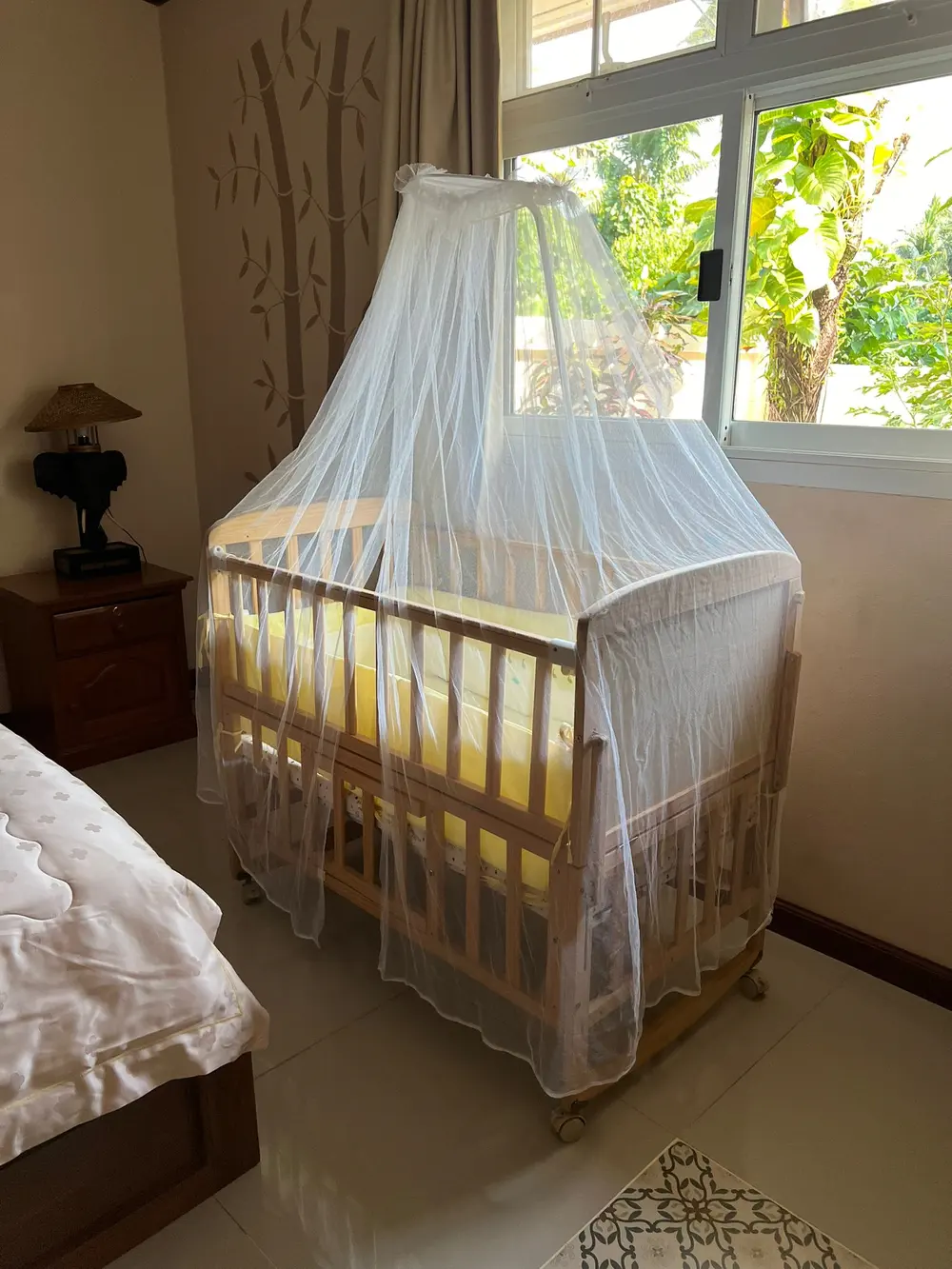
If you travel with a travel cot, your child already has a safe and familiar sleeping place. Adding a mosquito net makes that setup complete. Mosquito nets are very small and lightweight, but they offer reliable protection during the night, especially for babies and young children.
What to look for in a mosquito net for Asia
- 🕸️ Fine mesh that keeps mosquitoes out while allowing airflow
- 🤏 Lightweight and compact so it fits easily in your luggage
- 🛏️ Easy to place over a travel cot or regular bed
- ☀️ Suitable for warm climates
- 🏨 Flexible design that works in different accommodations
Which type of mosquito net works best
There are different mosquito net options, depending on your child’s age and sleeping setup.
For babies and young children, a mosquito net designed specifically for a baby bed or travel cot is the easiest and safest option. It fits snugly and stays in place during the night.
For older children, a larger mosquito net for a regular bed can also work well. This type is more flexible and can be used in different rooms and accommodations.
Both options are lightweight and easy to pack. Choosing the right one mainly depends on how your child sleeps and whether you use a travel cot.
Where to buy mosquito nets
Mosquito nets are widely available and do not need to be brand specific. Focus on size, mesh quality and ease of use.
Where to buy regular bed mosquito net:
- Amazon (available internationally)
- Bol.com (Netherlands and Belgium)
- Decathlon (available in many European countries)
Where to buy baby bed mosquito net:
- Amazon (available internationally)
- Bol.com (Netherlands and Belgium)
- Decathlon (available in many European countries)
When choosing a mosquito net, always check whether it matches the size of your travel cot or bed. A well fitting net provides much better protection than one that is too loose or too large.
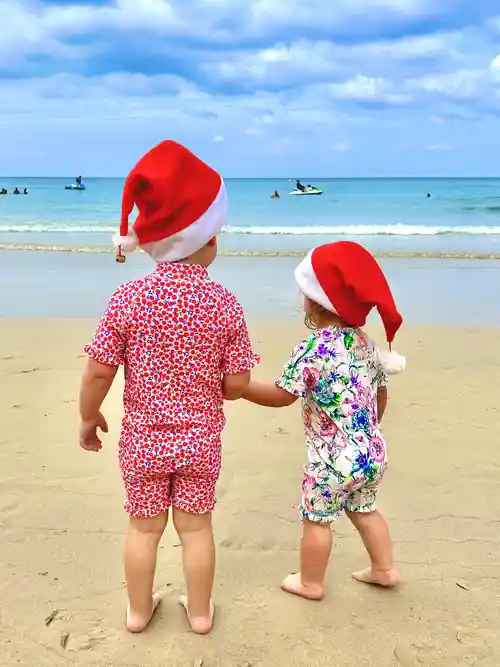
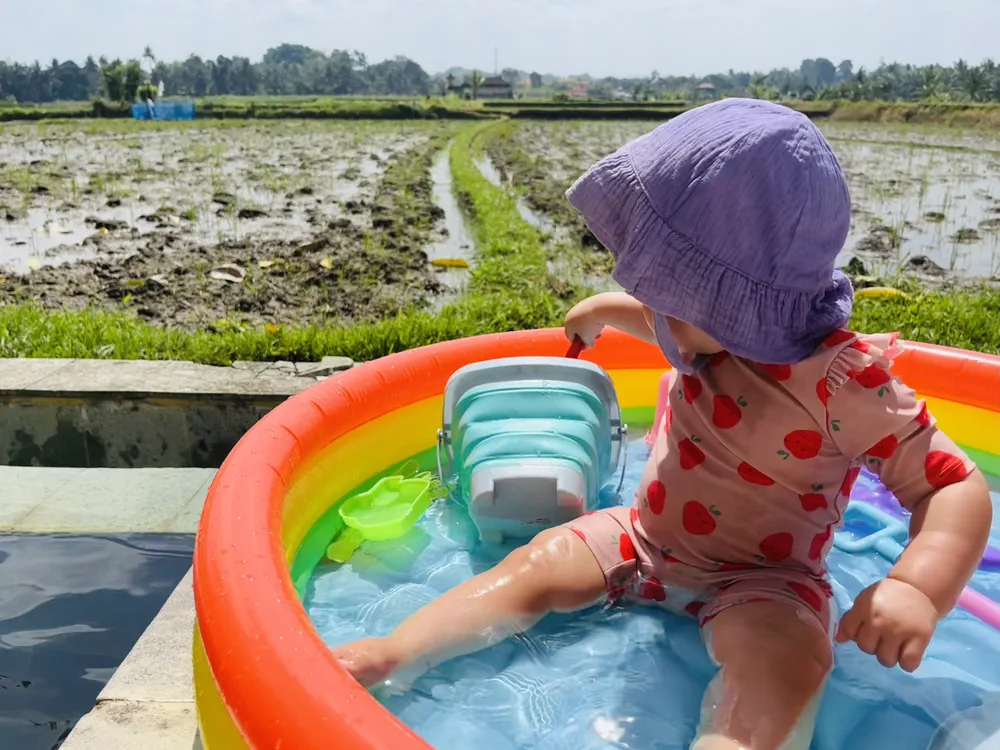
Sun protection is something you deal with almost every day when traveling through Asia with kids. Even on cloudy days, the sun can be strong, especially near the sea or pool. Rashguards and UV clothing offer reliable protection without constantly reapplying sunscreen and help keep children comfortable in warm, humid conditions.
A rashguard does more than protect against sunburn. It also protects the skin from sand, salt water and small jellyfish, which we have encountered before in places like Lovina with kids and around Nusa Lembongan with kids, where children often spend long hours in and out of the water.
What to look for in rashguards and UV clothing
- ☀️ UPF protection suitable for strong sun
- 🪶 Lightweight and breathable fabric
- 💦 Quick drying material for beach and pool days
- ✅ Comfortable fit that allows free movement
- ⏱️ Durable fabric that holds up after salt water and washing
Our go-to rashguards for traveling Asia
After trying different options, rashguards are what we rely on most during our trips. We prefer long sleeve rashguards for our kids because they provide extra sun protection and reduce skin contact with sand and small jellyfish in the water.
We use our own rashguards when traveling through Asia because they are designed specifically for warm climates and active kids. They dry quickly, stay comfortable even when wet, and work well for full beach days, snorkeling trips and pool time.
If you want to see the rashguards we personally travel with, you can find them via our shop. This is the option that has worked best for our family across different destinations and conditions.
Other UV clothing options
In addition to rashguards, UV swim shorts, hats and lightweight cover ups can be useful, especially for older kids who spend long days outdoors. For babies and toddlers, rashguards combined with shade and sunscreen offer a practical balance of protection and comfort.
Traveling through Asia with kids becomes much more enjoyable when you have the right gear. Lightweight, compact and practical items make it easier to move around, handle long travel days and adapt to different sleeping situations along the way.
The travel gear for kids we shared in this guide is based on real experience across multiple destinations in Asia. These are the items that helped us travel more comfortably, sleep better and enjoy each destination without unnecessary stress. While every family and trip is different, focusing on versatile, well tested gear will make a big difference when traveling with children in warm climates.
If you are planning your own family trip through Asia, we hope this guide helps you choose travel gear that fits your style of travel and the age of your kids. See also below some helpful guides:
📥 Want more tips? Visit our Family Travel Shop for printables, travel journals, and guides to make your trip smoother.
Check our socials for more family travel inspiration:
Enjoy your Asia adventure with your family!
The Little Passport Crew
The most essential travel gear for Asia with kids includes a lightweight travel stroller, a compact travel cot, a baby carrier suitable for hot climates, mosquito protection, UV clothing and a sleep solution for long flights. These items cover daily transport, sleep, sun protection and comfort in warm and tropical conditions.
Yes, bringing your own travel cot is often worth it when traveling Asia with young children. Many hotels either do not have baby beds available, or the beds provided are limited, unstable or already in use. A travel cot ensures your child always has a safe and familiar place to sleep and can also be used during daytime naps.
Most airlines allow inflatable airplane beds for children, but policies can vary depending on the airline and crew. They are generally accepted on long haul flights when used after takeoff and stored during landing. Inflatable airplane beds usually work best in standard economy seats and not in bulkhead rows.
A baby carrier is often more practical than a stroller in parts of Asia, especially for nature walks, stairs, boat transfers and uneven terrain. While strollers work well in cities, a carrier offers more flexibility for adventurous activities and allows children to rest or sleep while walking.
Yes, UV clothing is highly recommended for kids in Asia. The sun can be strong even on cloudy days, especially near water. Rashguards and UV clothing provide consistent sun protection, reduce the need for frequent sunscreen application and also help protect the skin from sand, salt water and small jellyfish.