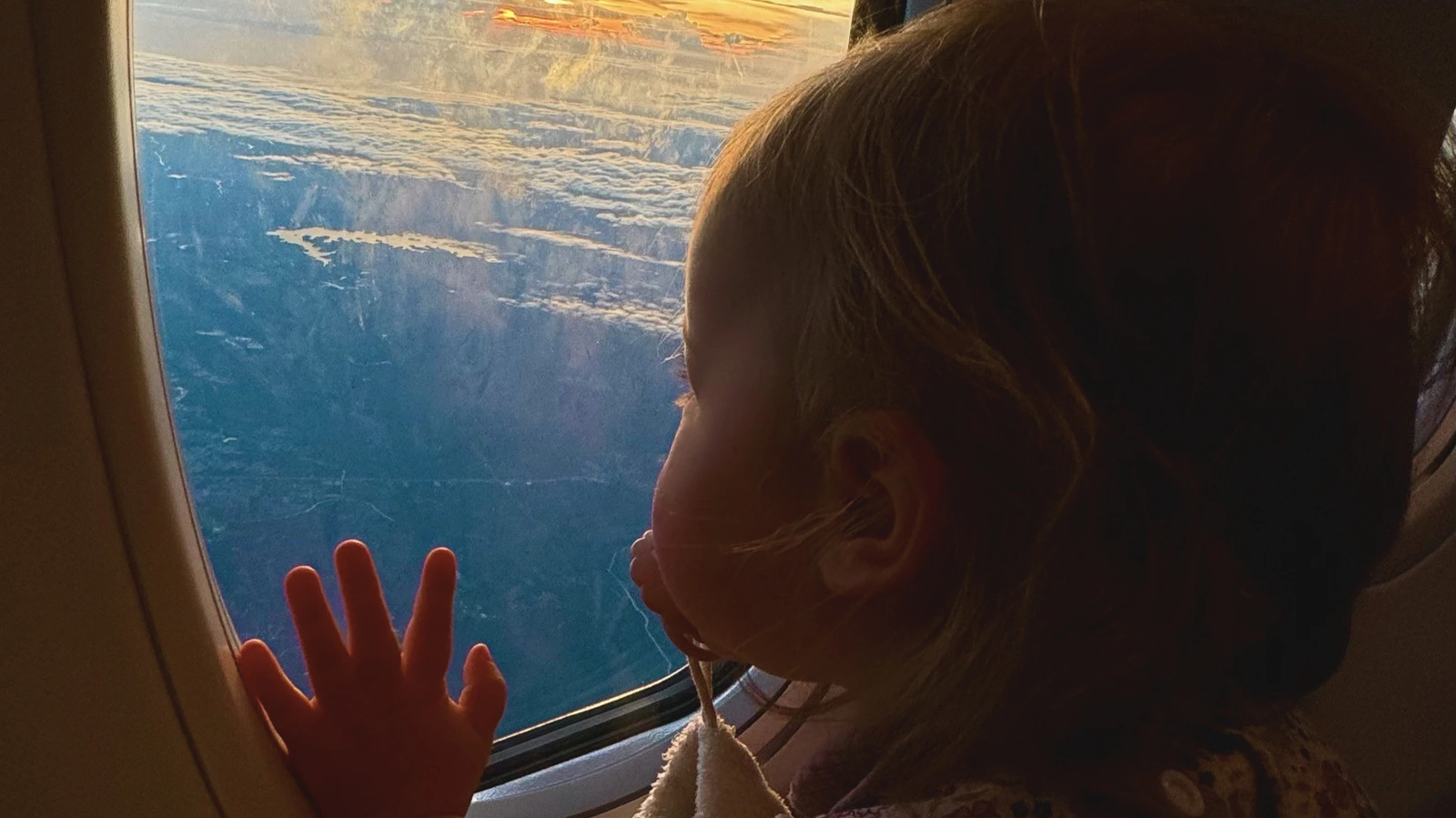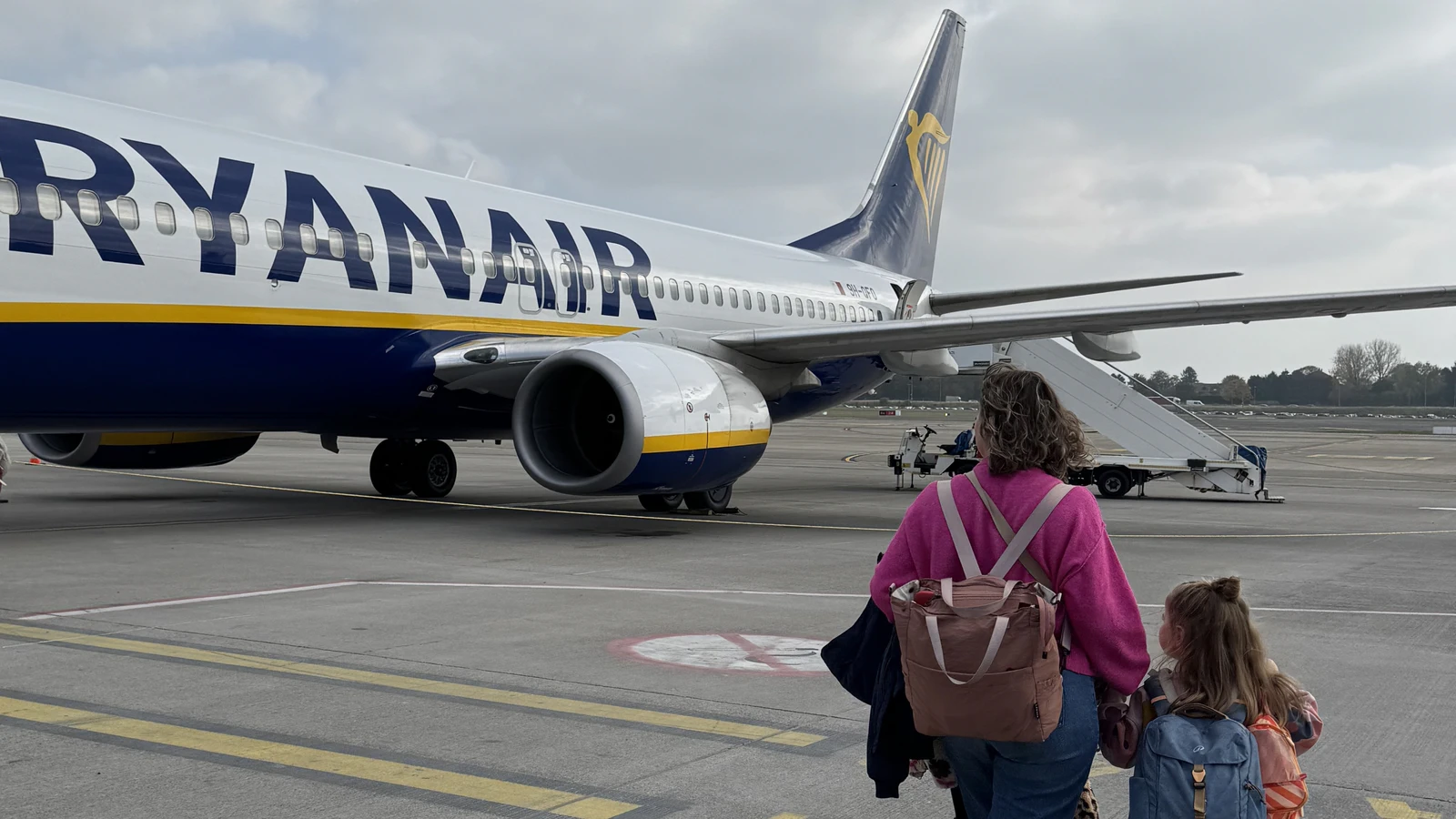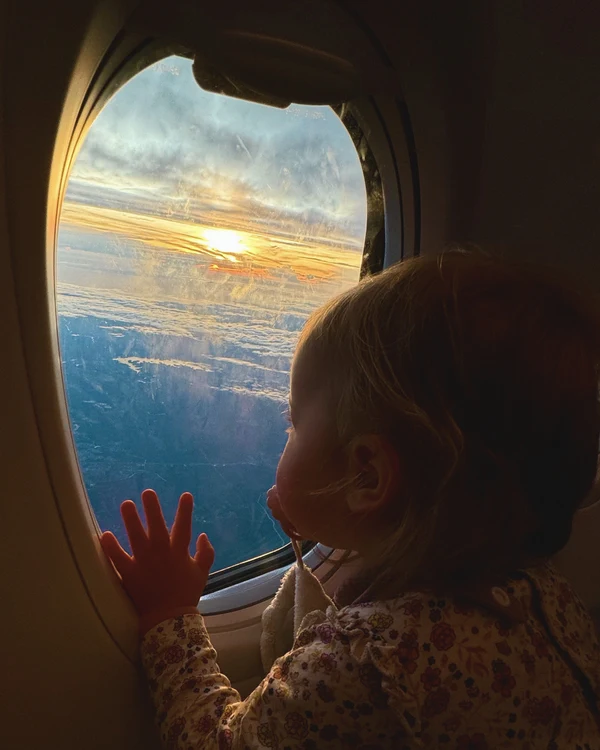
Flying with a baby doesn’t have to be stressful. Whether it’s your first air travel experience with a baby or one of many family trips, good preparation makes all the difference. Planning feeds, packing your carry-on well, bringing familiar comfort items, and staying flexible can make flying with a baby much easier than many parents expect.
Traveling with toddlers or older children too? Check out our complete guide to Flying with Kids for age-specific tips covering babies, toddlers, and older children.

Quick Summary: Flying with a Baby
In this guide, we’ll walk you through the whole journey step by step: from preparing before your flight to getting through the airport, helping your baby during takeoff and landing, surviving a long flight, and making the first days at your destination as smooth as possible.
Affiliate disclosure: We only recommend places and services we’d use ourselves. Some links on this page are affiliate links, which may earn us a small commission at no extra cost to you.
Flying with a baby starts long before you arrive at the airport. While you can’t control delays, turbulence, or whether your baby will sleep on the plane, you can prepare for the situations that are most likely to happen.
For us, the flights that felt the easiest weren’t necessarily the shortest ones. They were the ones where we’d already thought about feeding, sleep, and exactly what we needed in our carry-on before leaving home.
The more decisions you make before travel day, the fewer you have to make when you’re standing in a busy airport with a baby.
Since becoming parents, we’ve flown with our daughters on everything from short European flights to long-haul journeys across Asia. Some flights went incredibly smoothly, while others came with delays, missed naps, and plenty of unexpected moments. Every trip taught us something new, and this guide brings together everything we’ve learned along the way.
Before You Fly Checklist
- ✈️ Choose the best flight time if possible.
- 🛏️ Reserve a bassinet seat early (if your baby is eligible).
- 🎒 Pack your carry-on so everything is easy to reach.
- 👶 Decide whether you’ll bring a stroller, a baby carrier, or both.
- 📋 Keep passports and travel documents within easy reach.
🌙 Choose the Best Flight Time for Your Baby
If you have a choice, don’t just compare ticket prices. The timing of your flight can have a big impact on how relaxed your travel day feels.
For long-haul flights, we almost always choose overnight departures. With two young children, we’ve found that they give us the best chance of getting a few hours of sleep. Even if the kids don’t sleep for the entire flight, just a few hours of rest can make a huge difference for everyone.
For shorter flights, we usually do the opposite. We’d much rather fly during the morning or early afternoon than try to schedule a flight around a nap. By the time you’ve boarded, taken off, and landed, the flight is often over anyway.
When comparing flights, we usually look at:
- ✈️ Departure time
- 🛬 Arrival time
- ⏳ Total travel time
- 🔄 Layover length
Of course, the perfect flight isn’t always available. Price, route options, and availability sometimes make the decision for you. But whenever we have a choice, we’ve learned that flight times often matter more than saving a little money.
🛏️ Should You Book an Airplane Bassinet?
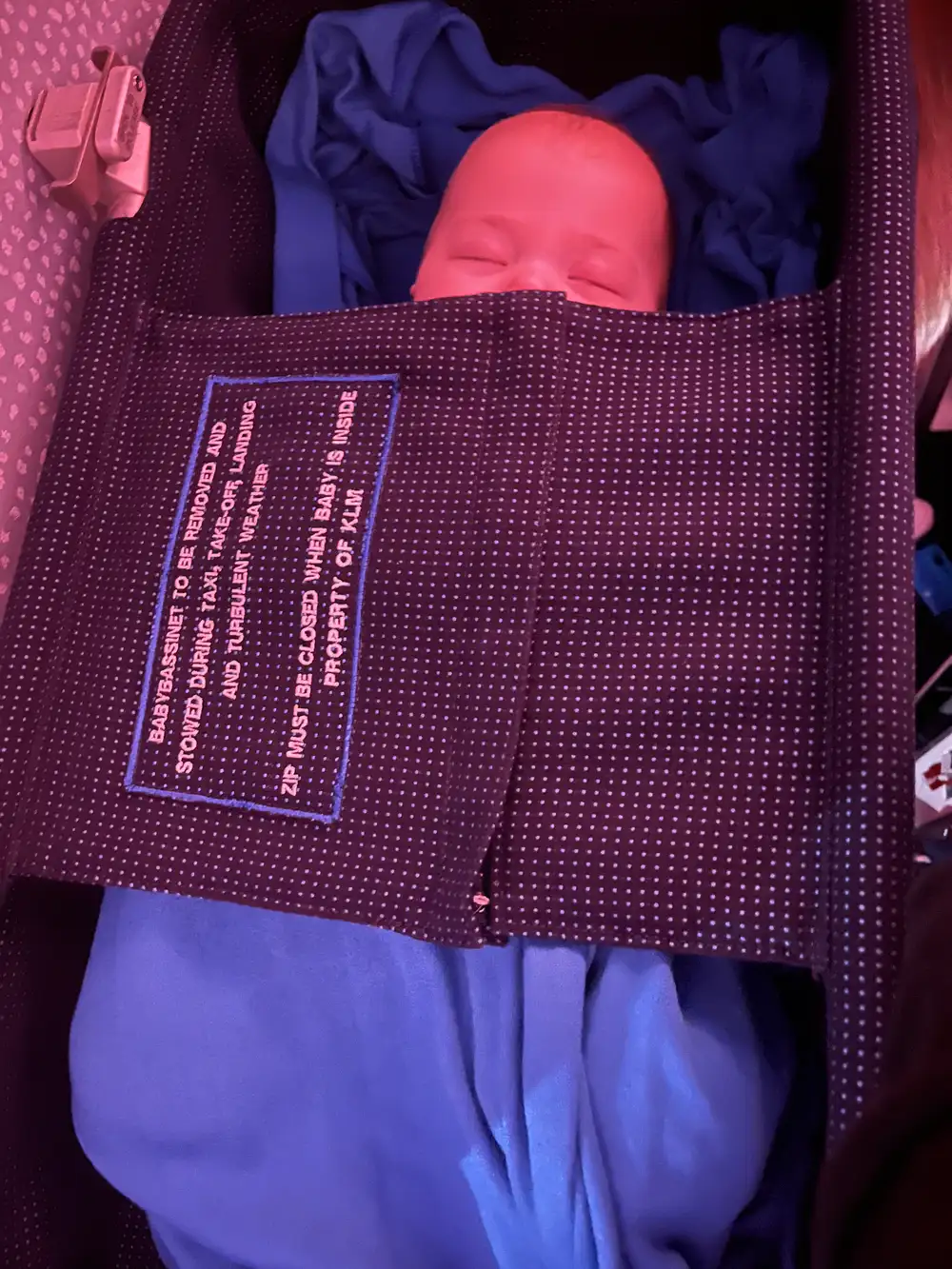
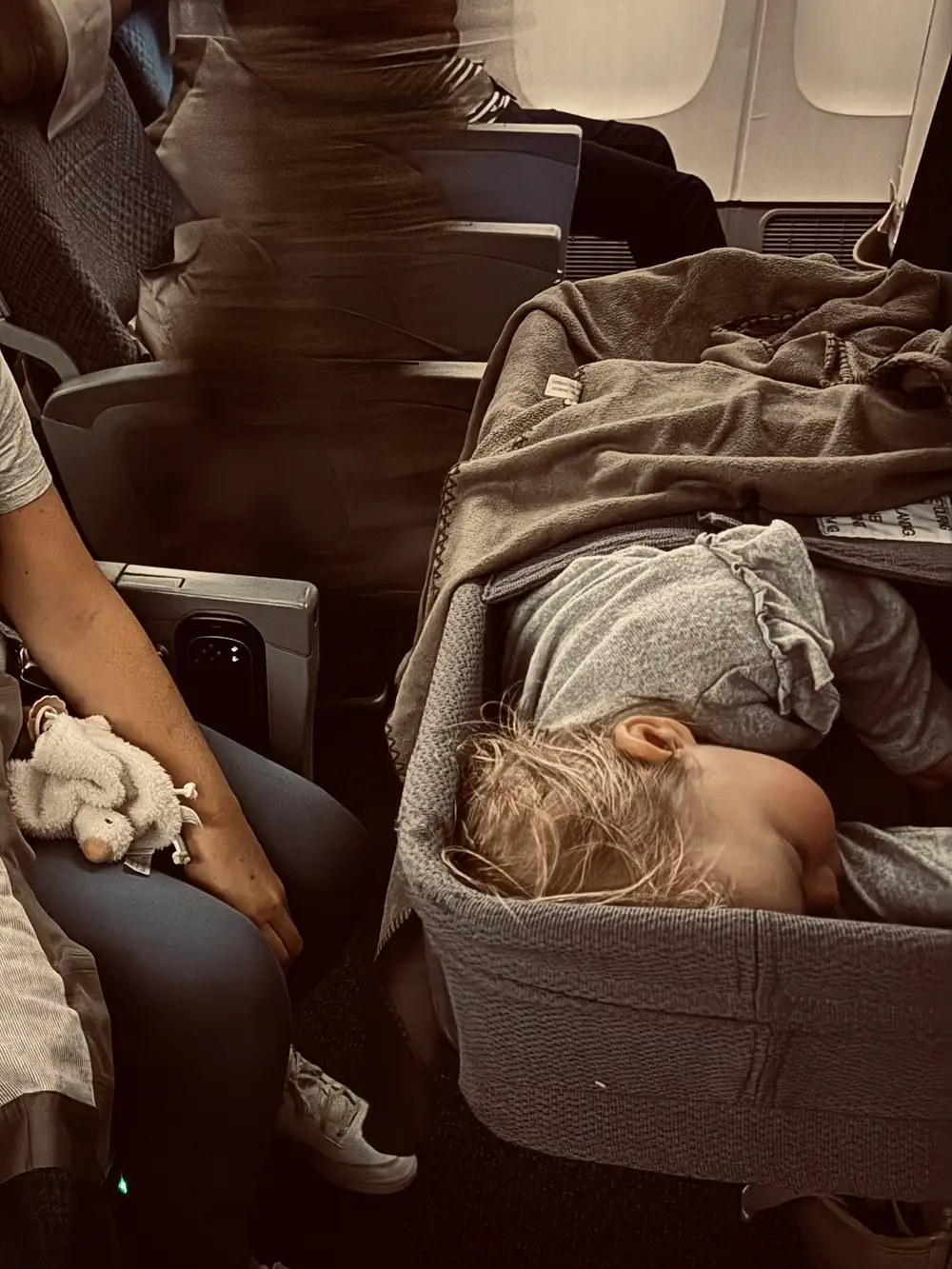
If you’re flying long haul with a young baby, we highly recommend requesting an airplane bassinet as early as possible. Most airlines offer a limited number of bassinets, so it’s worth requesting one when you book your flight.
A bassinet gives your baby a dedicated place to sleep while giving you the chance to eat, stretch, or simply have your hands free for a while. Even one or two hours with your hands free can make a huge difference on a long-haul flight.
If you’re traveling with two adults, try to keep your seats together. Being able to easily hand over your baby, prepare a bottle, or simply take turns makes a long flight much more manageable.
Things to Know About Airplane Bassinets:
- 👶 Most airlines have weight or size limits, so check your airline’s requirements before you travel.
- 🛏️ Bassinets are usually attached to bulkhead seats, which offer extra space in front of you.
- ⚠️ Availability is limited, so requesting one early gives you the best chance.
- 🌍 Every airline has different rules, so always check what’s included with your ticket.
💛 Crew Moment: During one of our overnight flights, we had to take our sleeping daughter out of the bassinet several times because of turbulence. She woke up almost every time, but we’d still book a bassinet again without hesitation.
🎒 Pack Your Baby’s Carry-On
Packing your baby’s carry-on is one of the few things you have complete control over before your trip. A well-organized bag can make feeding, diaper changes, and unexpected delays much less stressful.
Instead of packing everything into one large compartment, we like to organise our bag into smaller pouches. That way, one of us can quickly grab the diaper pouch or bottle essentials without unpacking the entire backpack in the middle of the aisle.
We also recommend packing a little more than you think you’ll need. Delays happen, babies spit up, diapers leak, and flights don’t always go according to plan.
📥 Free Carry-On Packing Checklist
Not sure what to pack? We’ve created a complete Carry-On Packing List for Kids, including baby essentials, travel documents, medicines, snacks, entertainment, and all the small things parents often forget.
👶 Stroller or Baby Carrier?
Whether you bring a stroller, a baby carrier, or both really depends on your destination and the way you like to travel.
When our daughters were babies, we almost always traveled with both. A compact travel stroller was perfect for airports and longer days exploring our destination, while a baby carrier was ideal whenever pushing a stroller simply wasn’t practical.
On some trips, we even left the stroller behind altogether. During our Philippines with Kids trip, for example, we relied almost entirely on a baby carrier because it suited our itinerary much better. Between island hopping, boat trips, uneven roads, and sandy beaches, we hardly missed the stroller at all.
Our favorite travel stroller is the Cybex Libelle. It folds down incredibly small, so bringing it along never feels like a hassle, even when we’re carrying it instead of pushing it. If the Libelle isn’t available where you live, the Stokke YOYO³ is another excellent option that many traveling families swear by.
If your baby is already comfortable in a carrier, we’d definitely recommend bringing one. We’ve taken our Tula Explore through airports, busy cities, waterfalls, beaches, and mountain trails, and it’s still one of the first things we pack for every family trip. It’s comfortable enough for longer walks and has become one of the most-used pieces of travel gear we’ve ever bought. If the Tula Explore isn’t available where you live, the Ergobaby Omni 360 is another excellent alternative.
Good to Know:
- 👶 A baby carrier is often the easiest option for airports, boarding, immigration, stairs, and uneven roads.
- 🛒 A compact travel stroller is ideal if your baby still naps regularly or you’ll use it a lot at your destination.
- 🏢 We’ve even used free airport strollers at airports like Singapore Changi. They’re handy during longer layovers, but we still prefer having our own stroller or baby carrier for the rest of the journey.

Our Favorite Baby Travel Gear
- 👶 Tula Explore Baby Carrier – the carrier we’ve used on almost every family trip, from airports and city breaks to waterfalls and mountain trails.
- 🛒 Cybex Libelle Travel Stroller – the stroller we’ve taken on family trips around the world thanks to its incredibly compact fold.
😴 Should You Adjust Your Baby’s Sleep Before Flying?
Travel days are already full of variables like early departures, traffic, delays, and unfamiliar surroundings, so we’ve found it’s better to keep things as normal as possible instead of changing your baby’s routine beforehand.
After many family flights, we think it’s usually not worth it. We used to think much more about naps and bedtimes before flying, but over the years we’ve learned that travel days rarely go exactly as planned anyway.
Instead, we try to keep the day as normal as possible and focus on creating a calm environment once we’re on the plane. If our baby sleeps, that’s great. If not, we know we’ll get through it.
We simply try to keep the day as normal as possible and let our baby sleep whenever they need to. For us, staying flexible has worked much better than trying to create the perfect sleep schedule before flying.
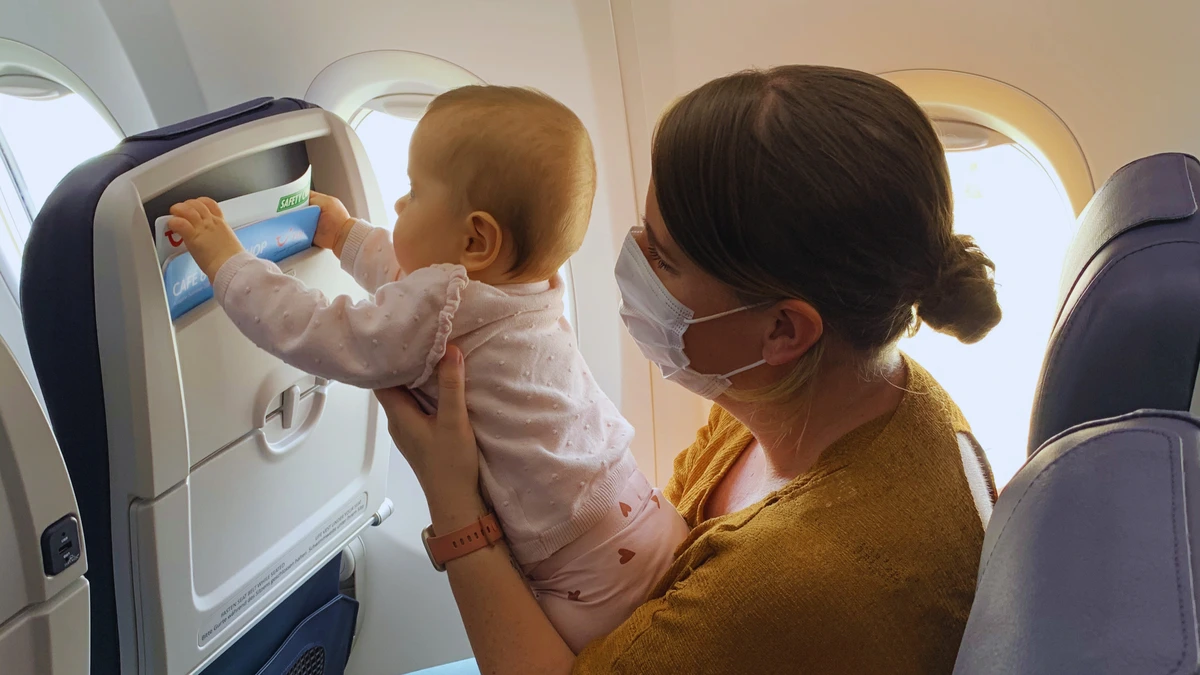
Airports can feel overwhelming when you’re traveling with a baby. Long security lines, busy terminals, delayed flights, and an overtired or hungry baby can quickly make things feel stressful.
Over the years, we’ve learned that a little preparation goes a long way. Arriving early, keeping your baby’s essentials within easy reach, and making the most of the time before boarding can make a huge difference.
Airport Checklist
- 🛂 Arrive early so you don’t have to rush through security or immigration.
- 🚼 Change your baby’s diaper before boarding if possible.
- 🚶 Let your baby move, crawl, or explore before getting on the plane.
- 🍼 Follow your baby’s normal feeding routine whenever possible.
- 👨👩👧 Use early boarding to get settled before the cabin gets busy.
- 🛒 Bring your stroller into the cabin if your airline allows it.
🛂 Arrive Early and Stay Organized
One of the easiest ways to reduce travel stress is simply giving yourself enough time. Traveling with a baby almost always takes longer than you expect, whether it’s checking in, going through security, changing a diaper, or stopping for a quick feed.
We always try to arrive at the airport earlier than we would have before having kids. It gives us time to deal with unexpected delays without feeling rushed, and it starts the trip in a much calmer way.
We’ve also learned that babies don’t always pick the most convenient moments. We’ve stood in long security lines with a crying baby before, and it’s much less stressful when you know you still have plenty of time.
Before joining the security line, we also make sure everything we’ll need during the flight is easy to reach. Passports, boarding passes, diapers, wipes, bottles, and a spare outfit should all be accessible without unpacking your entire bag.
🚶 Let Your Baby Move Before Boarding
The gate is your baby’s last chance to move around before spending several hours on the plane. Instead of sitting down straight away, we usually let our girls explore a little first.
Ideas while waiting to board:
- ✈️ Watch airplanes through the terminal windows.
- 🚶 Walk around the gate area together.
- 🛝 Visit the airport play area if there is one.
- 👶 Let your baby crawl or walk in a clean, safe space.
- 🎒 Save toys and screens for the flight itself.
In our experience, even a little movement before boarding helped our girls settle more easily once they had to stay seated on the plane.
👶 Should You Board Early with a Baby?
Many airlines offer priority boarding for families with young children. If that’s available, we almost always recommend using it.
Before we had kids, we usually waited until the last minute to board. Now we do the exact opposite. Boarding early gives us a chance to settle in without standing in a crowded queue or feeling rushed while other passengers are waiting behind us.
We use that extra time to fold the stroller, organize our carry-on, prepare bottles, and make sure everything we’ll need during takeoff is within easy reach. It also gives our daughters a few quiet minutes to get used to their new surroundings before the cabin fills up.
Why We Always Board Early:
- 👶 No waiting in a long boarding line with a baby.
- 🎒 More time to organize your bags and baby essentials.
- 🛏️ Easier to get settled if you’ve booked a bassinet.
- 😌 A calmer start to the flight for everyone.
🛒 Can You Bring Your Stroller on the Plane?
If your stroller is small enough, we’d always recommend bringing it into the cabin if your airline allows it.
Although gate-checking a stroller usually works well, it’s not always as convenient as people expect. Some airlines return it at the aircraft door, while others send it straight to the baggage carousel. If you have a long walk through the airport, a tight connection, or a tired baby, that can make a big difference.
That’s one of the reasons we love traveling with a compact stroller like the Cybex Libelle. It’s small enough for many airlines’ cabin baggage limits, although you should always check your airline’s rules before you travel.
Good to Know:
- 🛫 Not every airline accepts cabin strollers, even if they’re compact.
- 🔄 Gate-checked strollers aren’t always returned at the aircraft door.
- 👶 A baby carrier is a great backup if you have to check your stroller.
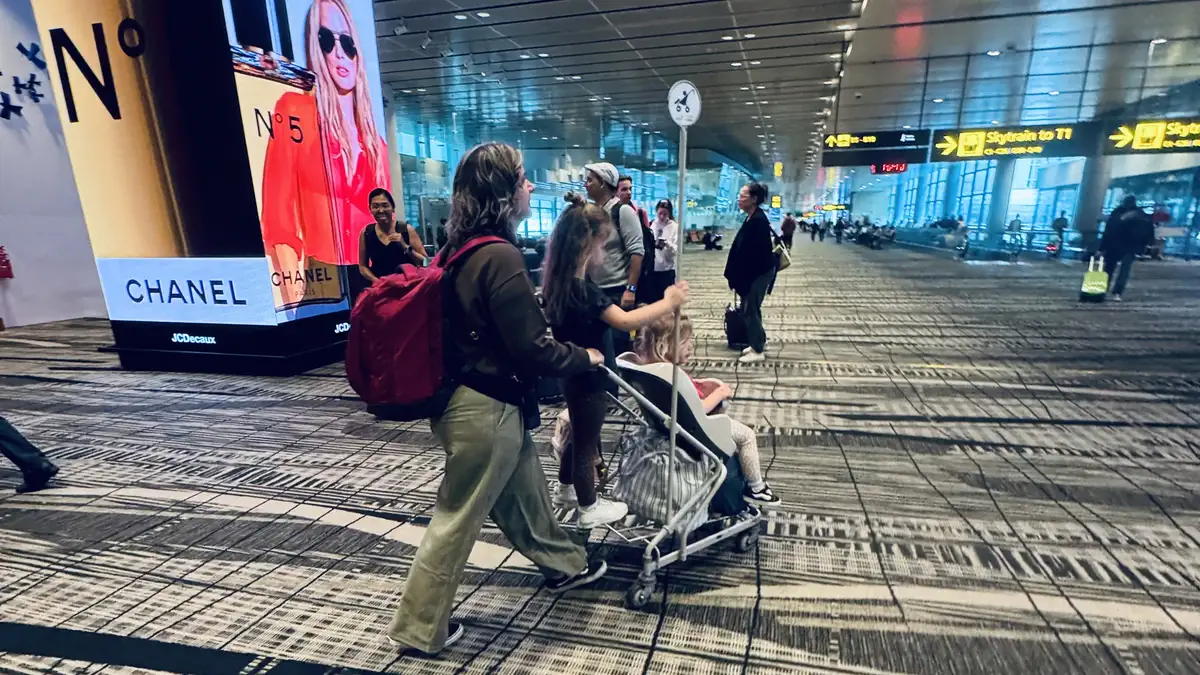
Takeoff and landing are often the moments parents worry about most when flying with a baby. Your baby has to stay on your lap, the seatbelt sign is on, and many parents wonder how to help with ear pressure.
Fortunately, there are a few simple things you can do to make these parts of the journey a little more comfortable for both you and your baby.
Takeoff/Landing Checklist
- 👂 Help protect your baby’s ears.
- 🍼 Feed your baby if it fits their routine.
- 🍼 Prepare bottles before takeoff if needed.
- ❤️ Stay calm if your baby cries.
👂 Help Your Baby’s Ears During Takeoff and Landing
One of the biggest worries parents have is whether flying will hurt their baby’s ears. Fortunately, this has never really been an issue for our daughters. Every baby is different, but we’ve never noticed them being particularly bothered by the pressure changes during takeoff or landing.
Swallowing may help equalize the pressure in the ears, which is why you’ll often hear parents recommend feeding or offering a pacifier during takeoff and landing. We’ll explain more about that below.
That said, we wouldn’t wake a sleeping baby just to feed them during takeoff or landing. If they’re sleeping peacefully, we usually let them sleep. The same goes for babies who simply aren’t interested in feeding at that moment. Try not to force it.
💡 Crew Tip: Once our daughters started eating solids, we often packed baby corn puffs for takeoff and landing. If they weren’t interested in a bottle, a few bites of a familiar snack were often enough to encourage swallowing.
🍼 Breastfeeding, Bottles, and Formula on the Plane
How you feed your baby during a flight will depend on their age and your usual routine at home. Whether you’re breastfeeding, bottle-feeding, or your baby has already started solids, we’ve always found it easiest to stick to our normal routine as much as possible.
What We Recommend:
- 🤱 Stick to your baby’s normal feeding routine.
- 🍼 If possible, time a feed around takeoff or landing.
- 🥣 Bring more milk, formula, snacks, or pouches than you expect to need.
- 🍎 Pack foods your baby already knows and enjoys.
- 💺 Keep everything you need within easy reach.
Should You Feed Your Baby During Takeoff and Landing?
If your baby is due for a feed, takeoff and landing are often good moments to breastfeed or offer a bottle. The sucking motion may help equalize ear pressure. We wouldn’t wake a sleeping baby just for this, but if they’re already awake and hungry, it’s a good opportunity.
Can You Bring Baby Milk Through Security?
This is something we wondered before our first flight too. In our experience, we’ve never had any problems bringing baby formula, expressed breast milk, or water for making bottles through airport security. We also regularly bring our children’s water bottles, and that has never been an issue for us either.
Rules can vary between airports and countries, so it’s always worth checking the latest requirements before you travel.
Can Cabin Crew Warm Bottles?
Usually, yes. If your baby drinks formula, we recommend asking before takeoff if you’d like a warm bottle. Once the aircraft starts taxiing, the cabin crew may not be able to help until the seatbelt sign has been switched off.
💡 Crew Tip: Many airlines let you pre-order a baby meal, which often includes a jar of baby food. It’s a nice extra, but we’d never rely on it. We always bring enough of our own milk, snacks, and baby food, so we know our daughters have something they’ll actually eat.
❤️ What If Your Baby Cries?
One of the biggest worries many parents have is what everyone else on the plane will think if their baby starts crying.
We felt exactly the same before our first long-haul flight to New York. Looking back, we were probably more nervous than our daughter was. Babies are incredibly good at picking up on how their parents feel, so staying as calm as possible really does help.
Let’s be honest. Nobody hopes to spend a long-haul flight sitting next to a crying baby. But at the same time, babies cry. Sometimes they’re tired, hungry, uncomfortable, or simply having a bad day. It’s part of traveling with young children.
We’ve had flights where one of our daughters cried for quite a while because she had a bad cold. There wasn’t much we could do except comfort her, offer a bottle, walk through the cabin when we could, and wait for it to pass.
In all the flights we’ve taken with our daughters, we’ve never had anyone complain or say anything negative. Most people simply carried on with their own journey.
If Your Baby Starts Crying:
- ❤️ Stay as calm as possible. Your baby will often pick up on how you feel.
- 🍼 Try offering a feed, pacifier, or familiar comfort item.
- 🚶 Walk through the cabin when the seatbelt sign is off.
- 🤍 Sometimes there isn’t a quick solution, and that’s okay. Just do the best you can.
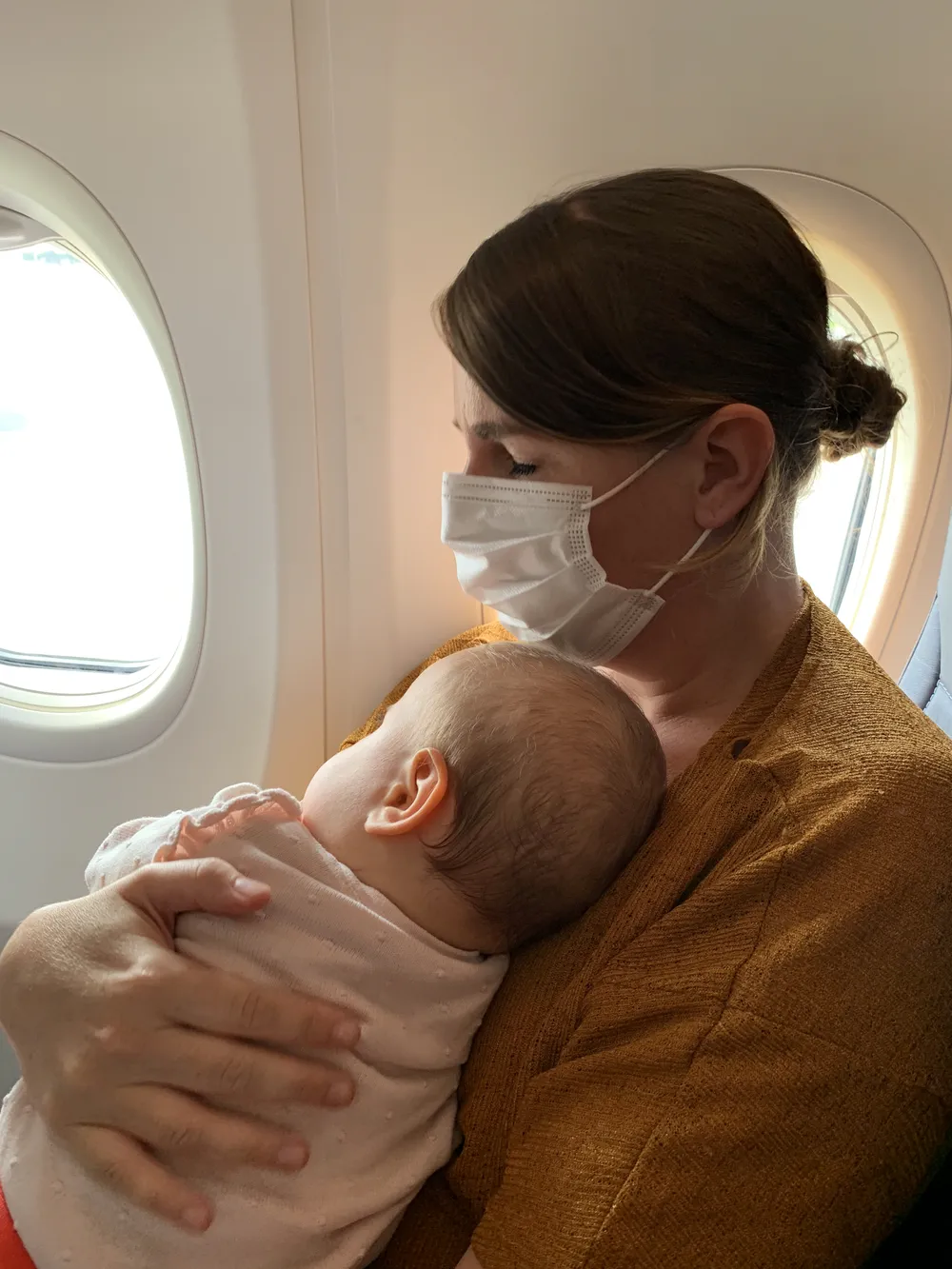
Once you’re in the air, there’s no perfect routine anymore. Your baby might be hungry, tired, ready to play, or all three within an hour. For us, it’s easiest to simply go with the flow and respond to whatever they need in that moment.
Here are the strategies that have helped us most during long flights with our daughters.
Our Best In-Flight Tips
- 😴 Help your baby sleep.
- 🚼 Be prepared for diaper changes.
- 🧸 Keep a few familiar toys within reach.
- 👕 Dress your baby in layers.
- ❤️ Remember that every flight is different.
🌙 Helping Your Baby Sleep on the Plane
Sleep is probably the biggest challenge on a long-haul flight with a baby. While every baby is different, these are the strategies that worked best for us.
What Helped Our Babies Sleep:
- 🛏️ Try the bassinet first. If it doesn’t work, let your baby fall asleep in your arms before trying again.
- 🤱 Keep bedtime familiar with a fresh diaper, a feed, and your usual bedtime routine.
- 🧸 Bring a familiar comfort item like a teddy, blanket, or muslin cloth.
- 👕 Dress your baby in layers so you can easily adjust if the cabin gets warm or cold.
- 🚶 Take a short walk through the cabin if your baby won’t settle and the seatbelt sign is off.
- 💤 Don’t force sleep. If it’s not happening, take a break and try again later.
- 💛 Rest when your baby sleeps. Baby naps on planes can end at any moment.
Follow Your Normal Bedtime Routine
If you’re taking an overnight flight, we found it helpful to keep bedtime as familiar as possible. We didn’t try to recreate our entire routine from home, but we did try to follow the same order.
For us, bedtime usually looked very similar to home: a fresh diaper, a short book, a bottle or breastfeed, and then time to sleep. We found that keeping the same order often worked better than trying to follow the exact same bedtime.
💡 Crew Tip: When your baby finally falls asleep, take the opportunity to rest yourself. It’s tempting to start watching a movie or sorting through your photos, but we’ve learned that baby naps on planes can end at any moment. Even 30 minutes of rest can make the rest of the journey much easier.
When Your Baby Only Wants to Sleep in Your Arms
Even if you’ve booked a bassinet, there’s a good chance your baby will want to sleep in your arms for at least part of the flight. That’s completely normal, especially on their first flights or when everything around them is unfamiliar.
We always offered the bassinet first whenever our daughters started getting sleepy. If they settled there, great. If not, we’d simply hold them until they fell asleep and then decide whether to transfer them later. Sometimes that worked perfectly, and sometimes they woke up the moment we put them down.
💡 Crew Tip: If your baby falls asleep on your lap, attach the airline’s infant seatbelt as soon as they’re settled. If the seatbelt sign suddenly comes on because of turbulence, you won’t have to wake them just to fasten it.
What If Your Baby Won’t Sleep?
Sometimes, despite trying everything, your baby simply doesn’t want to sleep. We’ve had flights like that too.
If you notice it’s just not happening, don’t keep trying to force it. Instead, take a break for a while. If the seatbelt sign is off, go for a short walk through the cabin, read a small book together, play for a few minutes, or simply let your baby look around. Sometimes a change of scenery is all they need.
After a little while, try again. We’ve often found that once our daughters had a chance to reset, they settled much more easily than when we kept trying to get them to sleep straight away.
In the end, every flight is different. We’ve learned not to judge a flight by how much our daughters slept. Sometimes they slept for hours, sometimes they hardly slept at all. Either way, we always made it to our destination, and they quickly settled back into their normal routine.
🚼 Changing Your Baby on the Plane
Changing a diaper on a plane is usually easier than most parents expect, although airplane bathrooms don’t leave you with much space to work. A little preparation makes the whole process much quicker.
We always found it easiest to keep a small diaper kit in our carry-on instead of taking our entire backpack to the bathroom. Ours usually included a foldable changing mat, a few diapers, wipes, diaper cream, and one spare outfit.
💡 Crew Tip: Change your baby before boarding if possible. It’s one less thing to think about during takeoff, and you’ll often avoid the queue for the airplane bathrooms once the flight is underway.
🧸 Keeping Your Baby Entertained on the Plane
Keeping a baby entertained for several hours doesn’t have to mean bringing an entire suitcase full of toys. In our experience, a few familiar favorites, combined with the excitement of being somewhere new, were often enough.
We usually packed a small selection of books, a few compact toys, and plenty of snacks once our daughters were old enough. Walking through the cabin, looking out of the window, or simply watching everything happening around them often kept them entertained longer than any toy.
When our daughters became restless, simply walking up and down the aisle with them in our arms often worked better than bringing out another toy. Sometimes a change of scenery was all they needed.
Once you’ve landed and collected your luggage, the biggest hurdle is behind you. As tempting as it is to start exploring straight away, we’ve found that taking it easy on your first day makes the whole trip feel much more relaxed.
😴 Helping Your Baby Adjust to Jet Lag
If you’ve crossed multiple time zones, your baby may experience a little jet lag. Sleep, feeding routines, and naps may be slightly off for the first couple of days. We usually tried to gently move our daughters back towards the local schedule, but we never stressed if it took a little longer. Every baby adjusts at their own pace.
🌴 Take It Slow on Your First Day
As exciting as it is to start exploring, we always found it helpful to keep our first day fairly relaxed. After a long flight, everyone is usually tired, including you. A quiet day, an early bedtime, and a little flexibility made the following days much more enjoyable.
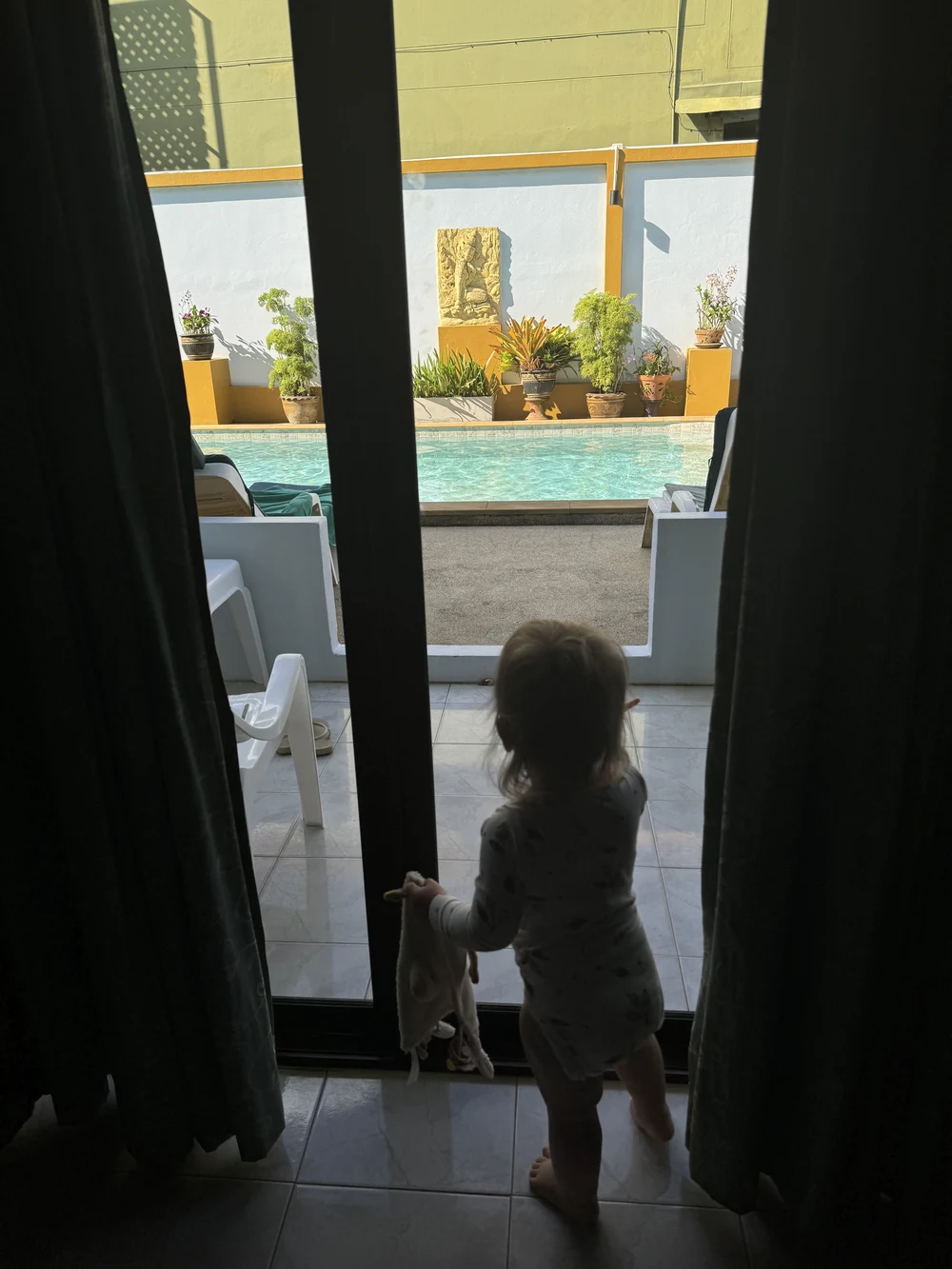
There is no perfect age to fly with a baby. Most airlines allow healthy full-term babies to fly from around 2 weeks old, although many parents prefer to wait until their baby is a little older. We took our daughters on their first flights while they were still babies, and found that good preparation mattered much more than their exact age.
Yes. Every baby, regardless of age, needs their own passport when traveling internationally. Some destinations may also require visas or additional travel documents, so always check the latest entry requirements before you travel.
Not always. Most babies under two years old travel as lap infants. On longer flights, however, some parents choose to book an extra seat for additional space, especially if they plan to use an airline-approved car seat.
A good rule is to pack enough diapers for the expected flight time, plus a few extra in case of delays. We always packed more than we thought we’d need because unexpected delays do happen.
Yes. Baby formula, breast milk, baby food, and water for preparing formula are generally allowed through airport security, although they may be inspected separately. Requirements can vary slightly by country, so it’s worth checking before you travel.
Encouraging your baby to swallow during takeoff and landing can help reduce pressure changes. Breastfeeding, bottle-feeding, or using a pacifier are all common ways to do this. If your baby is sleeping comfortably, we never found it necessary to wake them.
Every parent worries about this before their first flight, but babies cry, and most passengers understand that. Stay calm, comfort your baby, and remember that a few difficult moments don’t define the entire journey.
Yes, especially on long-haul flights with younger babies. While not every baby will sleep in the bassinet, having the extra space gave us a chance to rest our arms and made long flights much more comfortable.
For us, yes. We worried far more before our first flight than we ever needed to. Not every journey went perfectly, but each trip became easier, and today flying with our daughters feels completely normal.
Before our first flight with a baby, we worried about almost everything. Would our daughter cry? Would she sleep? Would the other passengers get annoyed? Looking back, we spent far more time worrying than we ever needed to.
Of course, not every flight went perfectly. We had delayed flights, missed naps, and plenty of moments that didn’t go according to plan. But every trip gave us more confidence, and before long, flying with a baby simply became part of our adventures.
Our biggest piece of advice is to prepare well, stay flexible, and don’t expect perfection. Every baby is different, and every flight will be too. As long as your little one feels safe, loved, and cared for, the small challenges along the way will soon be forgotten.
We hope this guide helps you feel a little more prepared for your own trip. Safe travels, and enjoy making those first travel memories together.
Planning a trip to Southeast Asia with kids? You may also like our guides to:
📥 Want more travel tips? Visit our Family Travel Shop for printables, travel journals, and guides to make your trip smoother.
Check our socials:
Enjoy your next adventure with your family ✈️
The Little Passport Crew